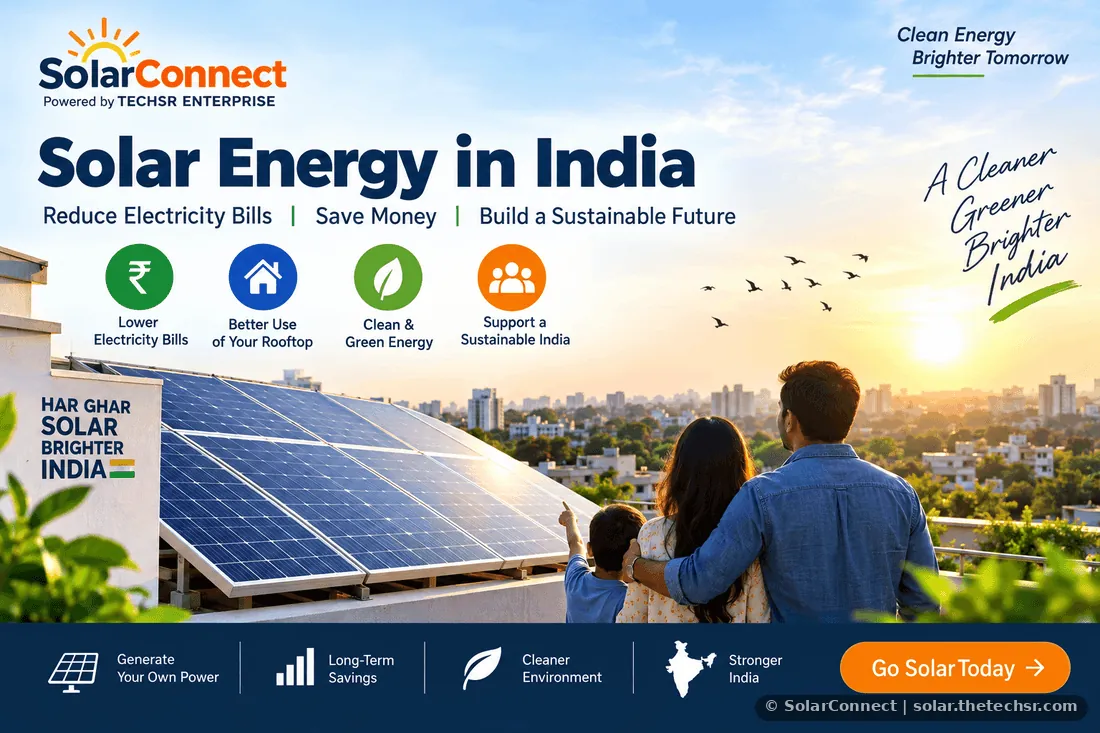
Solar Energy in India: How Rooftop Solar Can Reduce Electricity Bills and Build a Sustainable Future
Discover how rooftop solar systems work, how they can reduce electricity costs, and why solar energy is becoming an important choice for homes and businesses across India.
Solar Energy in India: A Practical Guide to Rooftop Solar
Solar energy is becoming an increasingly important part of India's clean-energy transition. With rising electricity consumption and growing interest in renewable energy, rooftop solar has emerged as a practical option for homes, shops, offices, factories and other commercial properties.
A rooftop solar system converts sunlight into electricity using photovoltaic, or PV, panels. The electricity generated can be used directly by the property, reducing the amount of power that needs to be purchased from the electricity grid.
How Does a Rooftop Solar System Work?
A typical rooftop solar installation consists of several important components:
• Solar panels: Convert sunlight into DC electricity.
• Solar inverter: Converts DC electricity into AC electricity used by electrical appliances.
• Mounting structure: Securely positions the panels on the roof.
• Protection equipment: Helps protect the system from electrical faults and surges.
• Net meter: Where applicable, records electricity imported from and exported to the grid.
During the daytime, solar panels generate electricity whenever sufficient sunlight is available. The generated power can first be used by the property, while excess electricity may be exported to the grid under the applicable electricity regulations and metering arrangement.
Why Should You Consider Rooftop Solar?
1. Reduce Electricity Costs
Solar generation can offset a portion of the electricity purchased from the grid. The actual savings depend on system capacity, electricity consumption, sunlight, tariff structure, installation quality and other factors.
2. Make Better Use of Your Rooftop
A suitable rooftop can become a productive energy-generating asset instead of remaining unused space.
3. Reduce Dependence on Conventional Electricity
Generating electricity locally can reduce dependence on grid-supplied power during periods when the solar system is producing electricity.
4. Support Clean Energy
Solar power produces electricity without directly burning fossil fuels during generation. Choosing renewable energy can therefore contribute to reducing the environmental impact associated with conventional electricity generation.
How Much Solar Capacity Do You Need?
There is no single solar-system size that is suitable for every property.
The right capacity should be estimated based on:
• Monthly electricity consumption
• Available rooftop area
• Roof orientation and tilt
• Shading from trees or nearby buildings
• Local solar conditions
• Electricity tariff
• Budget
• Applicable government regulations and subsidy provisions
For example, a household with relatively low electricity consumption may require a smaller system than a commercial property with high daytime electricity usage.
A professional site assessment is recommended before finalizing the system size.
What About Government Solar Subsidies?
The Government of India has introduced schemes to encourage residential rooftop solar adoption. Eligibility, subsidy amounts, application procedures and installation requirements can change, so consumers should always verify the latest information through official government channels before making a financial decision.
A subsidy should also not be the only factor considered when selecting a solar system. Panel quality, inverter performance, installation standards, warranty, after-sales service and long-term maintenance are equally important.
Choosing the Right Solar Installer
Selecting the right installation partner is an important part of a successful solar project.
Before placing an order, consider:
1. Product specifications and certifications
2. Installer experience
3. Warranty terms
4. Installation workmanship
5. System monitoring facilities
6. After-sales support
7. Estimated annual generation
8. Total project cost
9. Applicable subsidy or regulatory requirements
10. Expected maintenance requirements
Avoid choosing a system based only on the lowest quoted price. A properly designed and professionally installed system can provide better long-term value.
Is Solar a Good Investment?
Solar should be evaluated as a long-term energy investment rather than simply as a one-time purchase.
The potential financial benefit depends on the initial installation cost, electricity tariff, system generation, self-consumption, financing cost, maintenance and applicable incentives.
A simple financial evaluation can compare:
Installation Cost → Annual Solar Generation → Electricity Savings → Payback Period → Long-Term Benefit
Actual results will vary from one property to another.
The Future of Solar Energy in India
India has significant solar-energy potential, and rooftop solar can play an important role in distributed electricity generation.
As solar technology continues to improve, consumers are also gaining access to better monitoring systems, more efficient equipment, energy storage solutions and smarter energy-management technologies.
For homeowners and businesses considering solar, the best approach is to start with accurate electricity-consumption data and a proper site assessment.
Conclusion
Rooftop solar can be a practical way to generate clean electricity and potentially reduce long-term electricity expenses. However, the success of a solar project depends on choosing the right system size, quality equipment, professional installation and proper maintenance.
Before investing, compare your electricity consumption, available roof space, expected generation, total project cost and applicable government benefits.
Solar energy is not simply about installing panels on a roof. It is about making your property smarter, more energy-efficient and better prepared for the future.
Source: SolarConnect India – solar.thetechsr.com
Back to Solar Blog