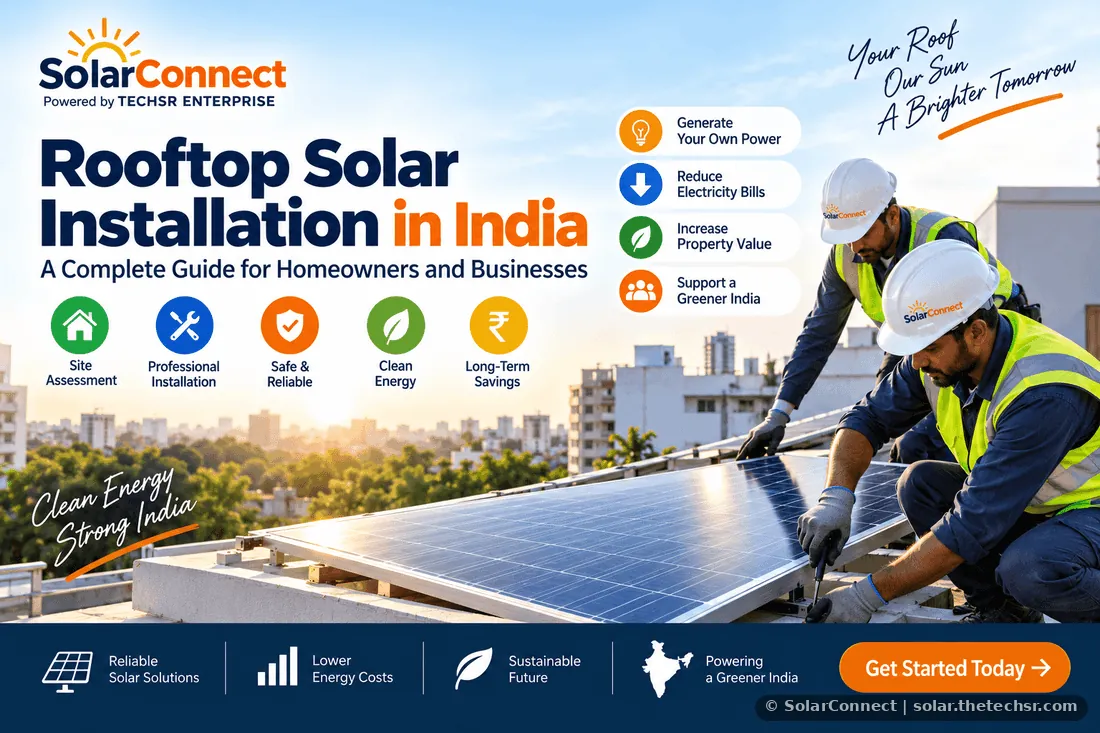
Rooftop Solar Installation in India: A Complete Guide
How rooftop solar installation works in India: system design, roof and shading checks, installation steps, grid connection and maintenance for homes and businesses.
Rooftop Solar Installation in India: A Complete Guide
Rooftop solar is becoming a practical energy solution for homes, shops, offices, schools, hospitals, factories and other commercial properties across India.
A properly designed solar power system can help generate electricity from sunlight, reduce dependence on grid electricity and potentially lower long-term electricity expenses.
However, installing solar panels is not simply a matter of placing panels on a roof. The system needs to be properly designed, installed, connected and maintained for reliable performance.
What Is Rooftop Solar?
A rooftop solar system uses photovoltaic panels installed on a suitable roof to generate electricity from sunlight.
A typical system includes:
• Solar PV panels
• Solar inverter
• Mounting structure
• DC and AC protection equipment
• Cables and connectors
• Earthing and safety equipment
• Metering equipment where applicable
• Monitoring system
The exact configuration depends on the property, electricity connection, system capacity and applicable regulations.
Step 1: Check Your Electricity Consumption
Before selecting a solar system, understand how much electricity your property actually uses.
Look at your recent electricity bills and check:
• Monthly units consumed
• Electricity tariff
• Sanctioned load
• Daytime electricity consumption
• Seasonal changes in consumption
This information helps determine whether a small, medium or larger solar system would be appropriate.
Step 2: Evaluate Your Rooftop
The roof is one of the most important factors in solar installation.
A good rooftop should have:
• Adequate usable area
• Sufficient structural strength
• Good sunlight exposure
• Minimum shading
• Suitable orientation
• Safe access for installation and maintenance
Trees, neighbouring buildings, water tanks and other structures can create shadows that reduce solar generation.
A professional site survey should therefore be completed before finalizing the system design.
Step 3: Select the Right Solar Panels
Solar panels are available in different technologies and specifications.
When comparing panels, consider:
Efficiency:
Higher efficiency can help generate more electricity from limited roof space.
Warranty:
Check both product warranty and performance warranty.
Quality:
Choose equipment from reliable manufacturers and verify applicable certifications and standards.
Physical suitability:
The panel dimensions, weight and mounting requirements should be suitable for the rooftop.
The cheapest panel is not always the most economical choice over the entire life of the system.
Step 4: Choose the Right Inverter
The inverter is an important component because it converts the DC electricity generated by the panels into AC electricity used by electrical appliances.
Depending on the project, different inverter configurations may be suitable.
The installer should consider:
• Solar system capacity
• Electricity connection
• Number of panels
• Roof layout
• Shading conditions
• Monitoring requirements
• Applicable electrical standards
A correctly sized inverter can help the system operate efficiently.
Step 5: Professional Mounting and Installation
Solar panels must be securely mounted to withstand local weather conditions.
The mounting structure should be installed correctly and should maintain appropriate panel spacing and orientation.
During installation, attention should be given to:
• Structural safety
• Waterproofing
• Cable management
• Earthing
• Electrical protection
• Connector quality
• Safe maintenance access
Poor installation can create unnecessary risks and may affect system performance.
Step 6: Electrical Safety
Solar installations involve electrical equipment and should be completed by qualified professionals.
Appropriate protection may include:
• DC isolators
• AC protection
• Surge protection
• Earthing
• Proper cable sizing
• Suitable connectors
• System isolation facilities
Safety should always be considered before installation cost or appearance.
Step 7: Solar Metering and Grid Connection
For grid-connected systems, the applicable metering and interconnection process depends on the local electricity distribution company and current regulations.
The consumer may need to complete documentation, inspection and other formalities before the system is fully connected to the grid.
Requirements can change, so always verify the latest process with the relevant electricity distribution authority.
How Long Does Solar Installation Take?
The physical installation itself can often be completed relatively quickly, but the complete project timeline may also depend on:
• Site survey
• System design
• Equipment availability
• Installation
• Electrical inspection
• Metering
• Documentation
• Grid approval
Therefore, consumers should distinguish between the installation time and the complete project completion timeline.
How Can You Get Better Solar Performance?
After installation, regular monitoring can help identify problems early.
Keep an eye on:
• Daily energy generation
• Monthly generation
• Inverter status
• Unexpected performance drops
• Panel cleanliness
• Shading changes
Dust and dirt can accumulate on panels, particularly in areas with dry or dusty conditions. Cleaning requirements depend on the local environment and manufacturer recommendations.
Common Mistakes to Avoid
Choosing Only by Price
A very low quotation may not include the same equipment quality, installation standards or after-sales support.
Ignoring Roof Shading
Even partial shading can affect generation, depending on the system configuration.
Selecting the Wrong System Size
Oversizing or undersizing a system without considering actual consumption can reduce the financial value of the project.
Ignoring Warranty Terms
Always understand what is covered, for how long and who will provide after-sales support.
Poor Cable Management
Improperly installed cables and connectors can create reliability and safety problems.
Is Rooftop Solar Worth It?
For many properties, rooftop solar can provide meaningful long-term benefits. However, the economics depend on individual circumstances.
A proper evaluation should consider:
System Cost + Electricity Consumption + Solar Generation + Electricity Tariff + Financing + Maintenance + Applicable Incentives
The expected payback period should be calculated using realistic generation and electricity-cost assumptions rather than only promotional estimates.
Final Checklist Before Installing Solar
Before confirming your solar project, check:
☑ Electricity consumption
☑ Available rooftop area
☑ Shading conditions
☑ Structural suitability
☑ Solar panel specifications
☑ Inverter specifications
☑ Mounting structure
☑ Electrical protection
☑ Warranty
☑ Installation quality
☑ Metering requirements
☑ After-sales service
☑ Total project cost
Conclusion
A successful rooftop solar project starts with good planning.
The right system size, quality equipment, proper roof assessment, professional installation and regular monitoring can make a significant difference to long-term performance.
Whether you are a homeowner, business owner or property manager, solar should be treated as a long-term energy investment rather than simply a purchase of solar panels.
Plan carefully. Install professionally. Generate your own clean energy.
SolarConnect | Powered by TECHSR ENTERPRISE
Source: SolarConnect India – solar.thetechsr.com
Back to Solar Blog