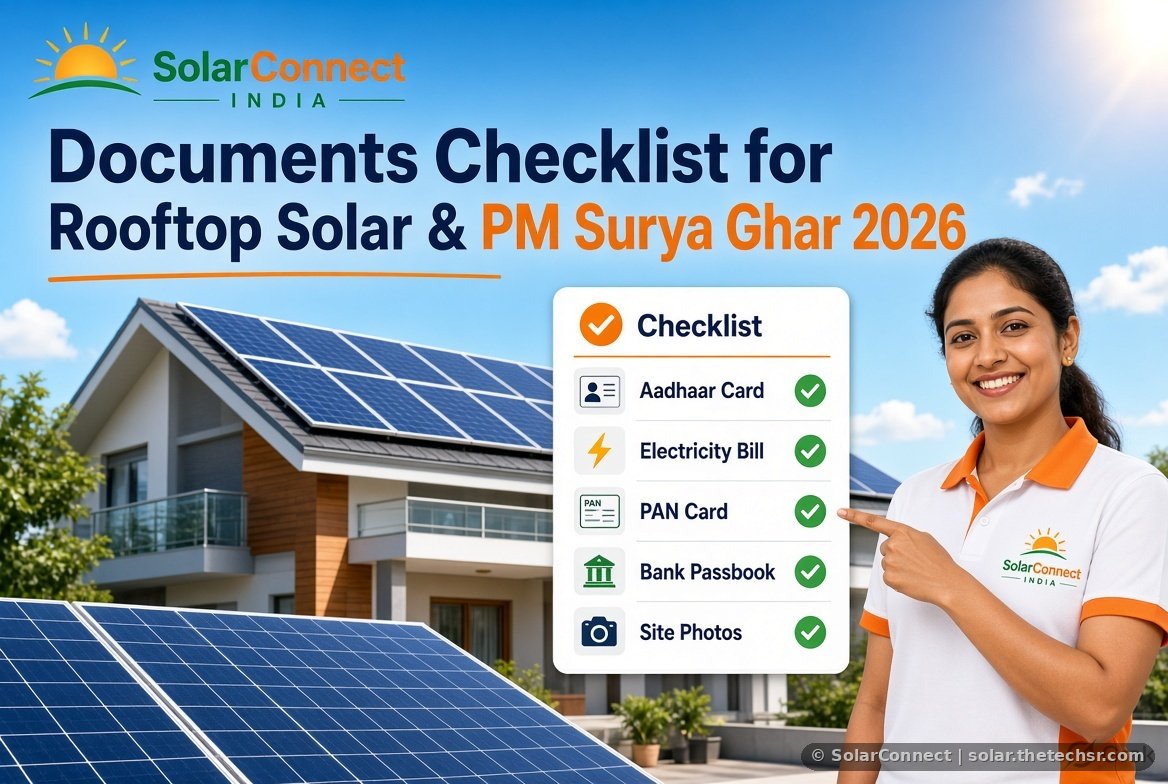
Solar Documents Checklist 2026: Aadhaar, Electricity Bill, PAN & Site Survey (PM Surya Ghar)
Complete documents checklist for rooftop solar installation and PM Surya Ghar subsidy in India 2026. Collect Aadhaar, electricity bill, PAN…
Read guide →Powering a smarter solar future for India. Explore solar energy in one professional information platform — from rooftop solar and electricity-bill planning to on-grid, off-grid, hybrid systems, batteries, solar pumps, solar technology, government support and commercial solar opportunities.
Residential · Commercial · Industrial · Agricultural · Institutional · Off-Grid · Storage
SolarConnect India · Techsr Enterprise
Talk to the SolarConnect team about rooftop solar and PM Surya Ghar subsidy, or join our pan-India solar dealer network.

Solar system types
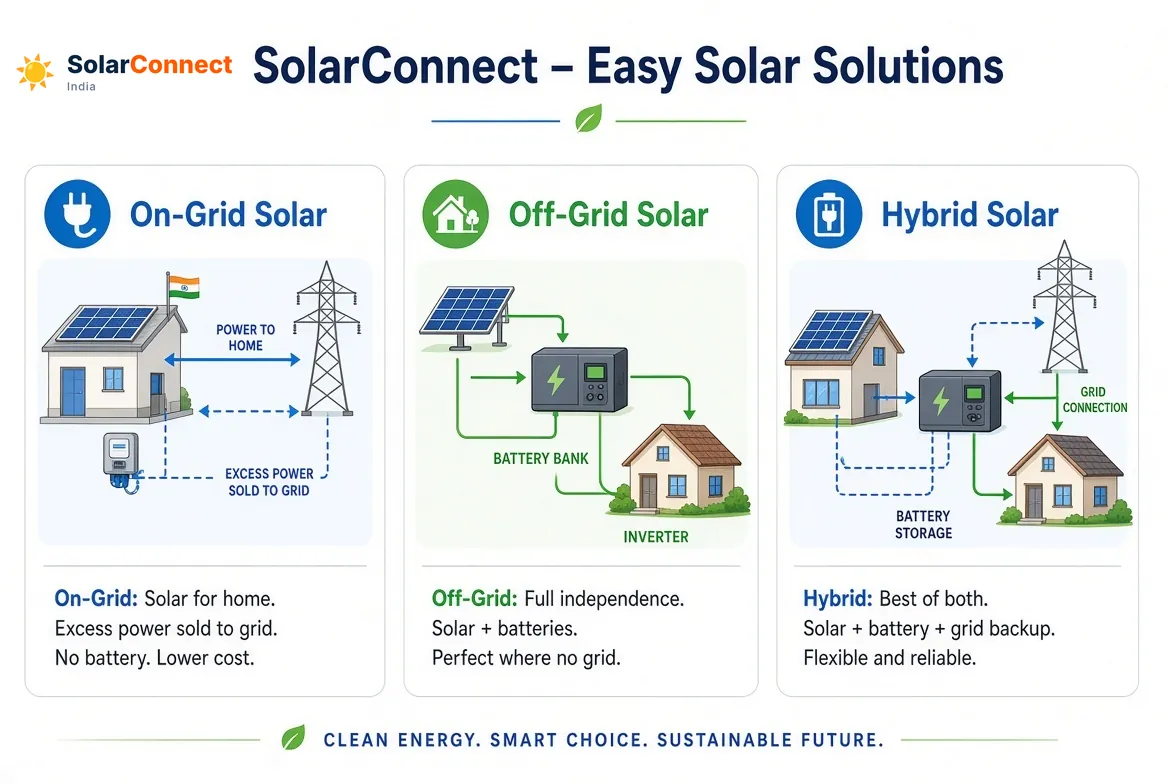
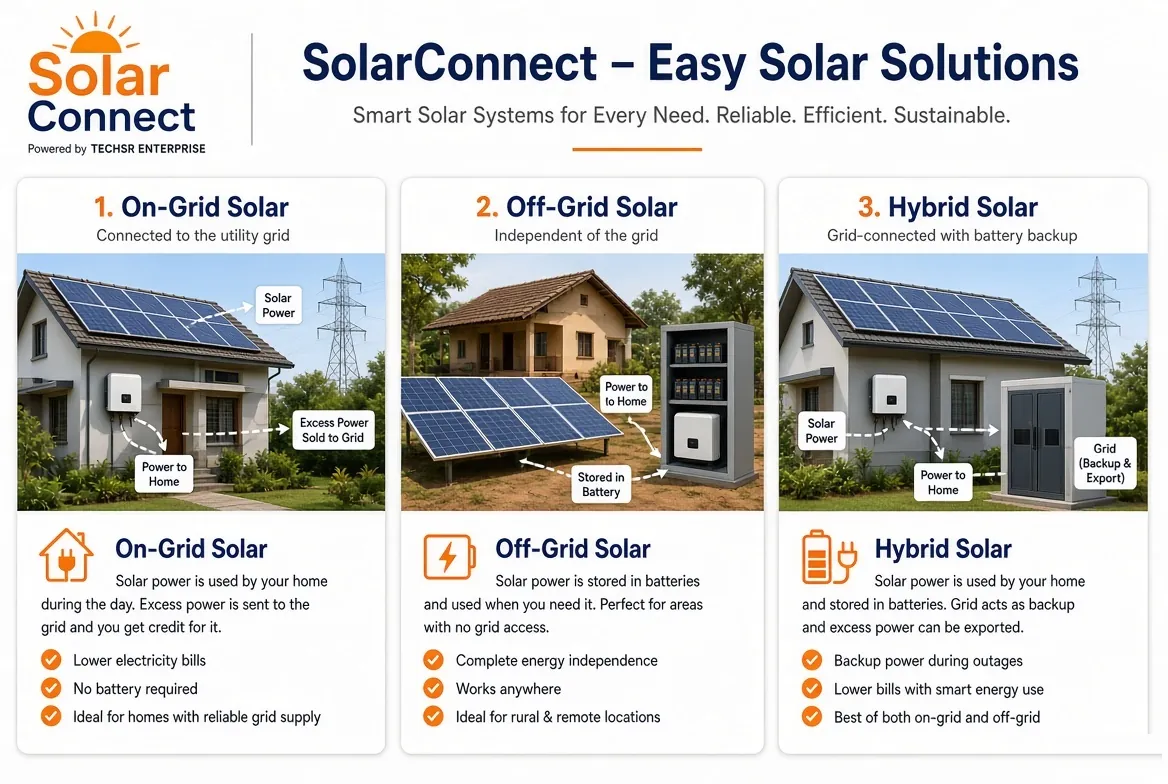
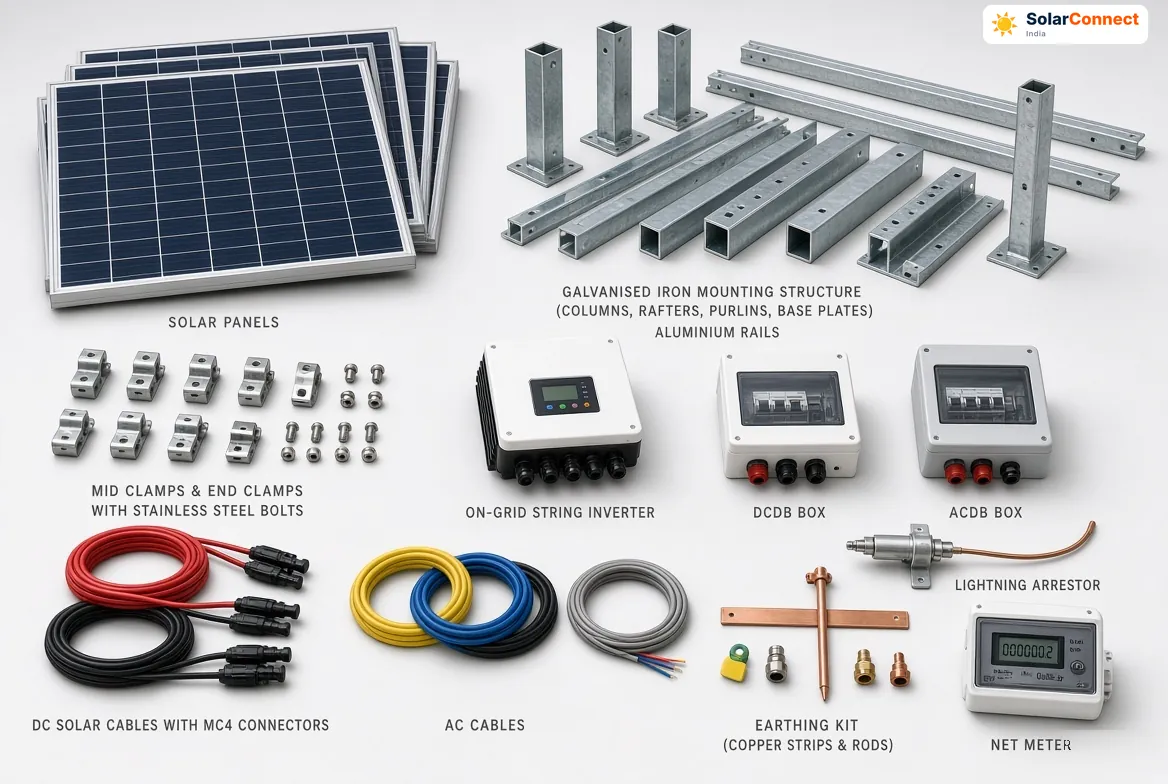
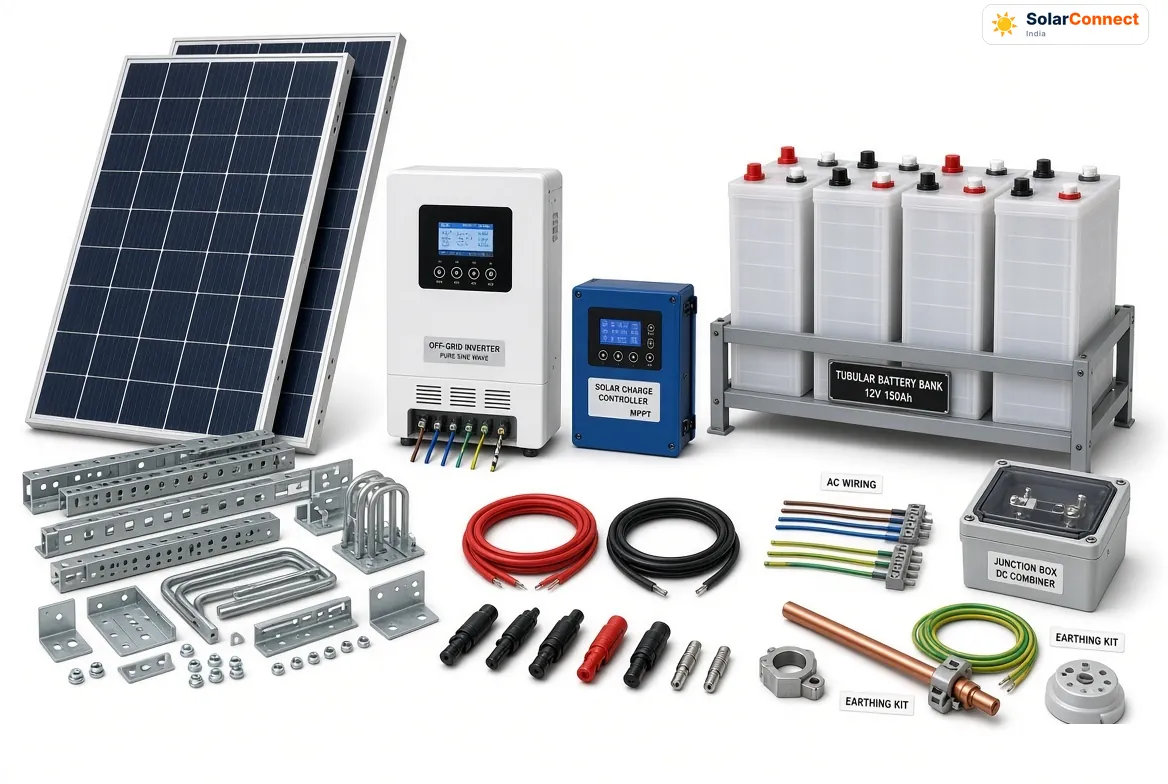
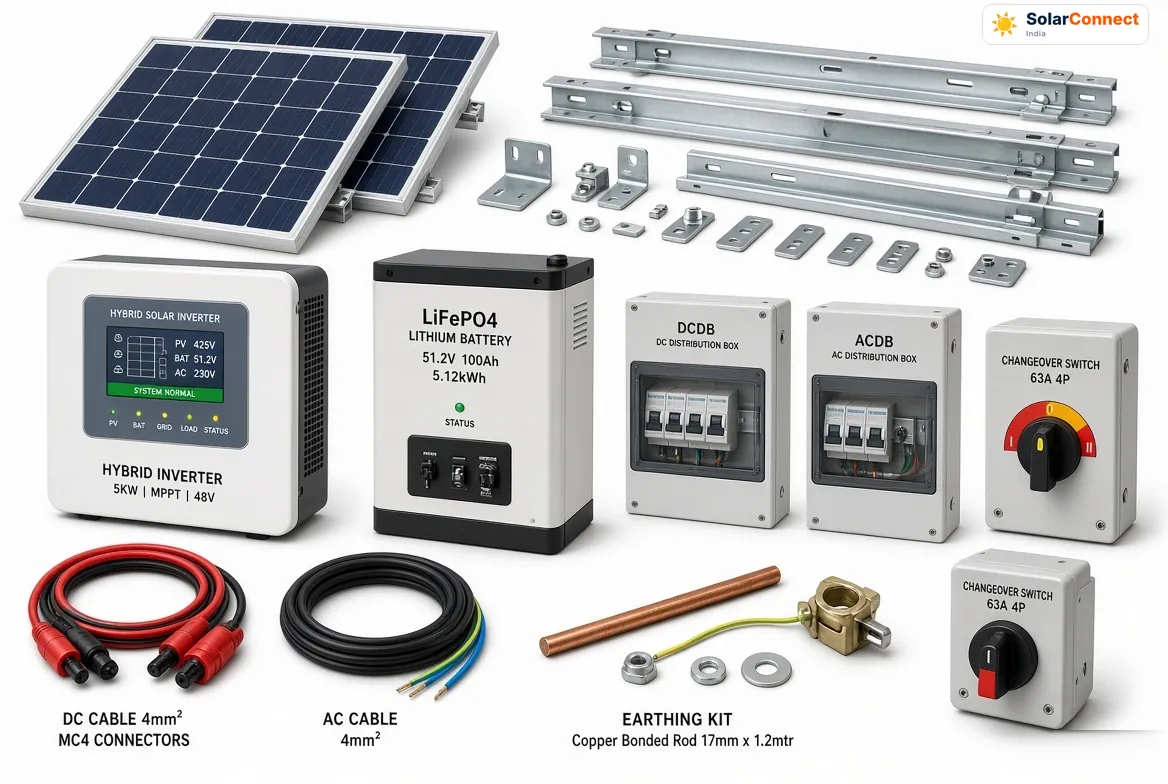
Compare the three main rooftop solar system types to see which suits your electricity bill, power cuts and backup needs.
Solar kit
Brands

We install Adani Solar panels and other leading brands. Brand availability may vary by location.
Services
Installation
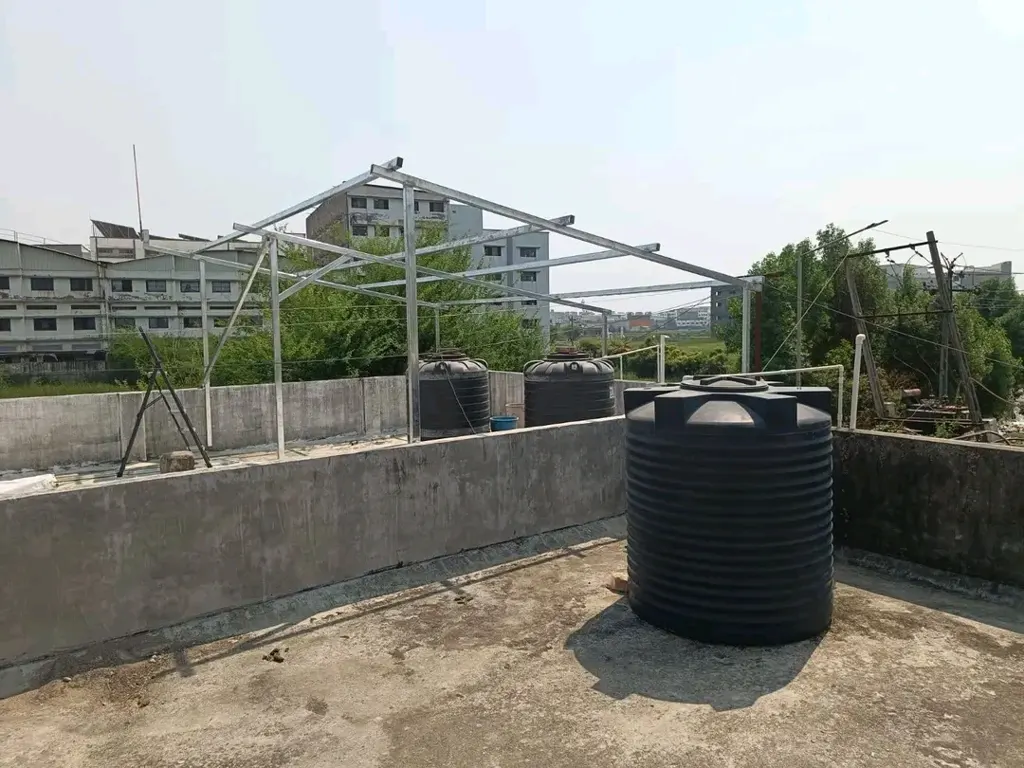
Installation process
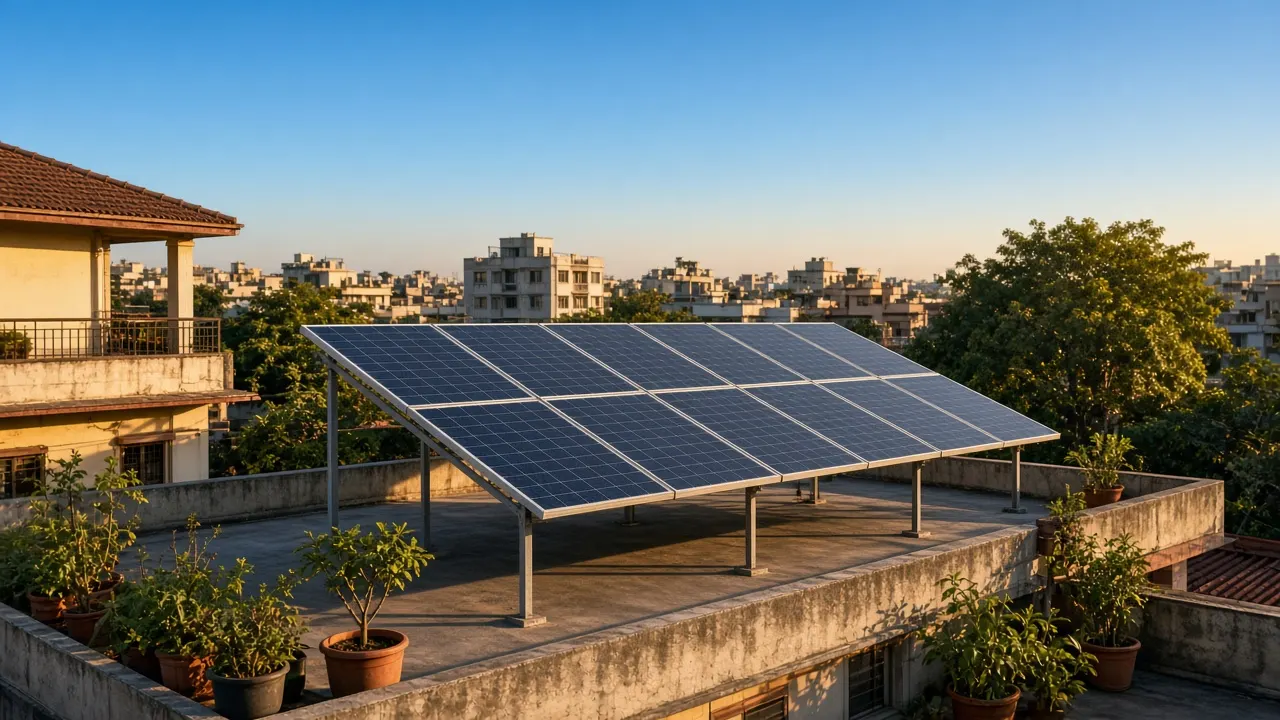
A typical SolarConnect rooftop solar installation follows these five steps, after the site survey and system design are finalised.
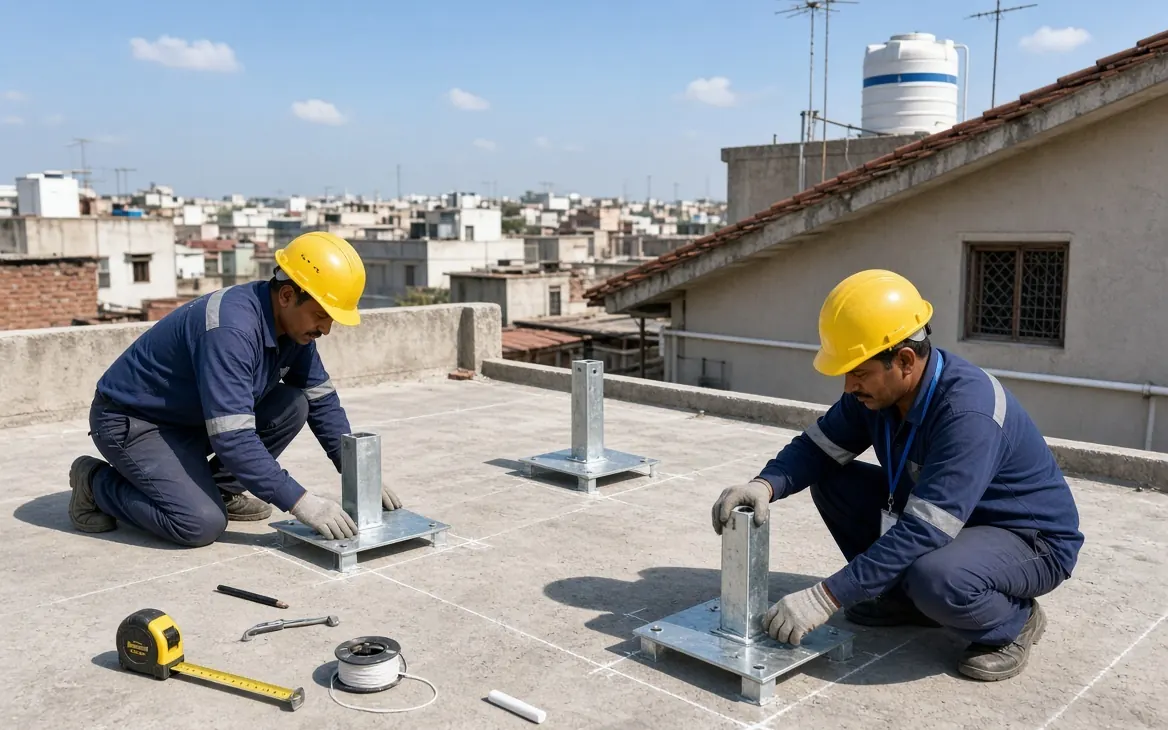
The team marks the panel layout on the roof and fixes the structure base plates securely to the concrete.
Illustration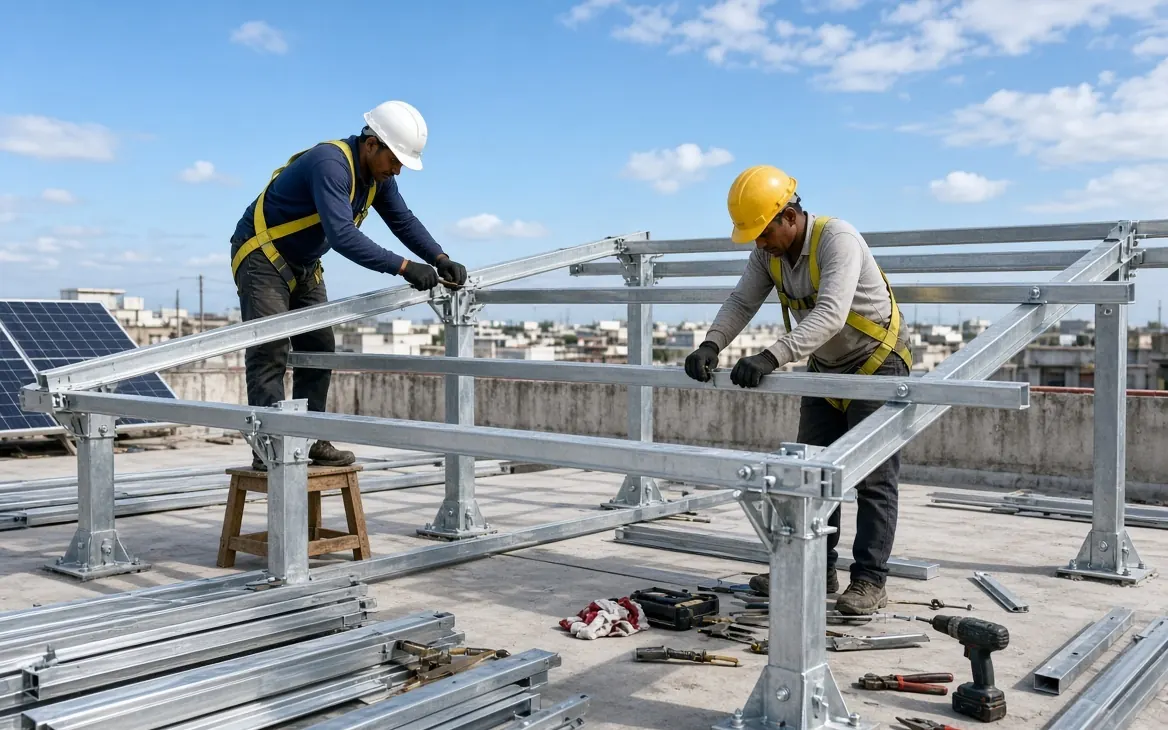
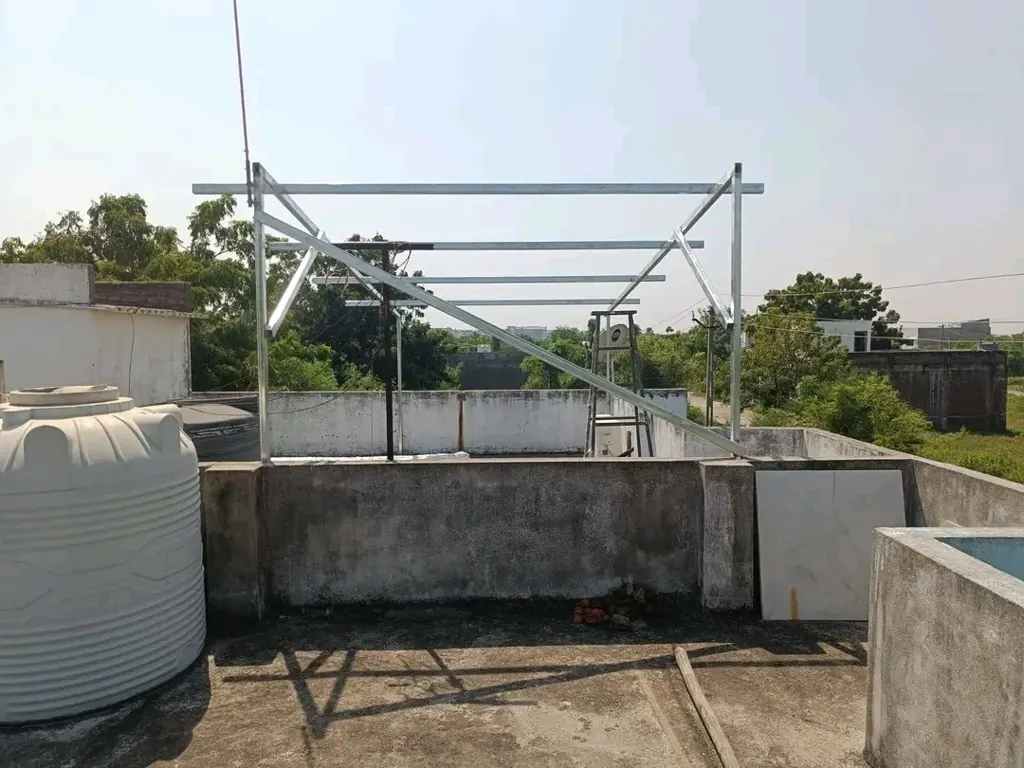
Galvanised columns, rails and frames are assembled and aligned to the planned tilt and orientation.
Illustration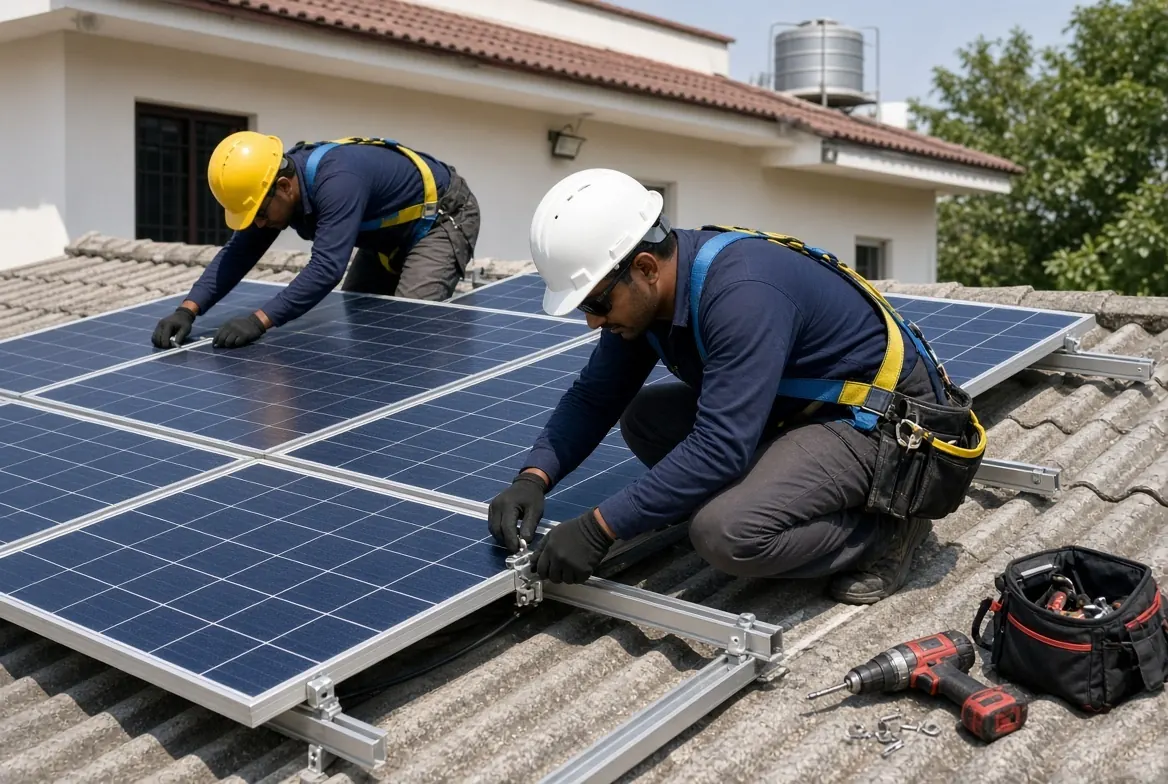
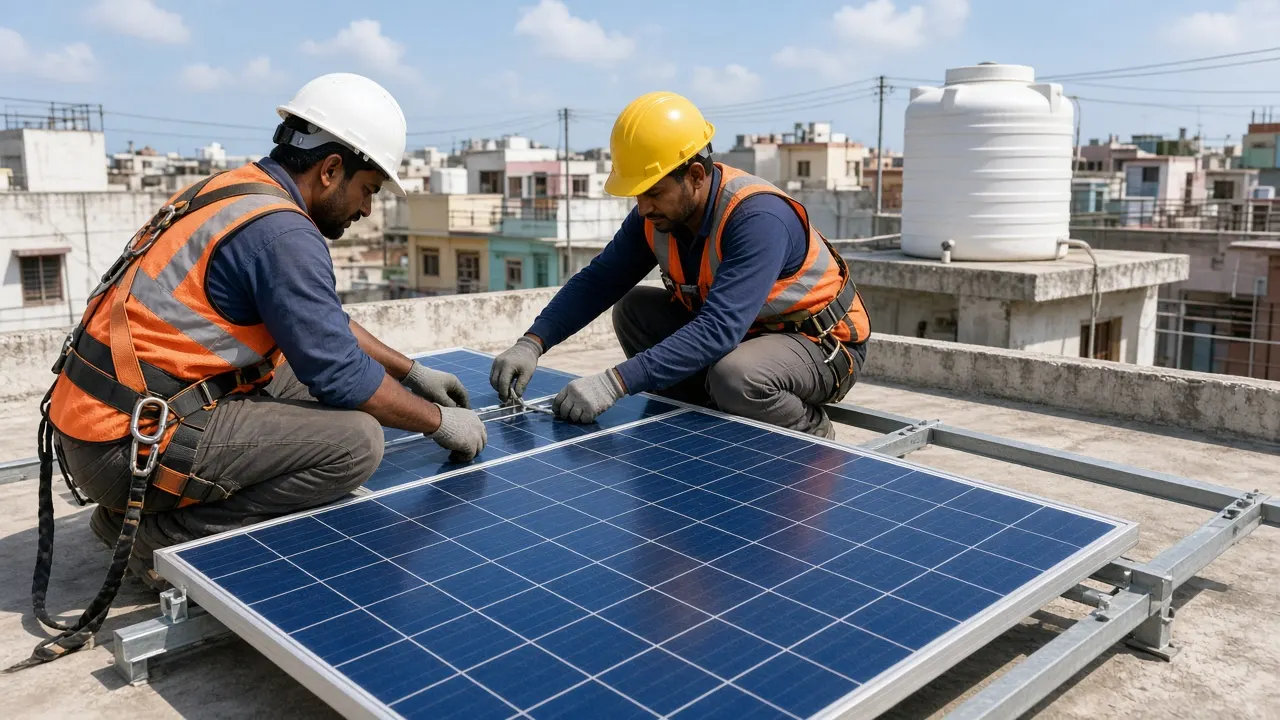
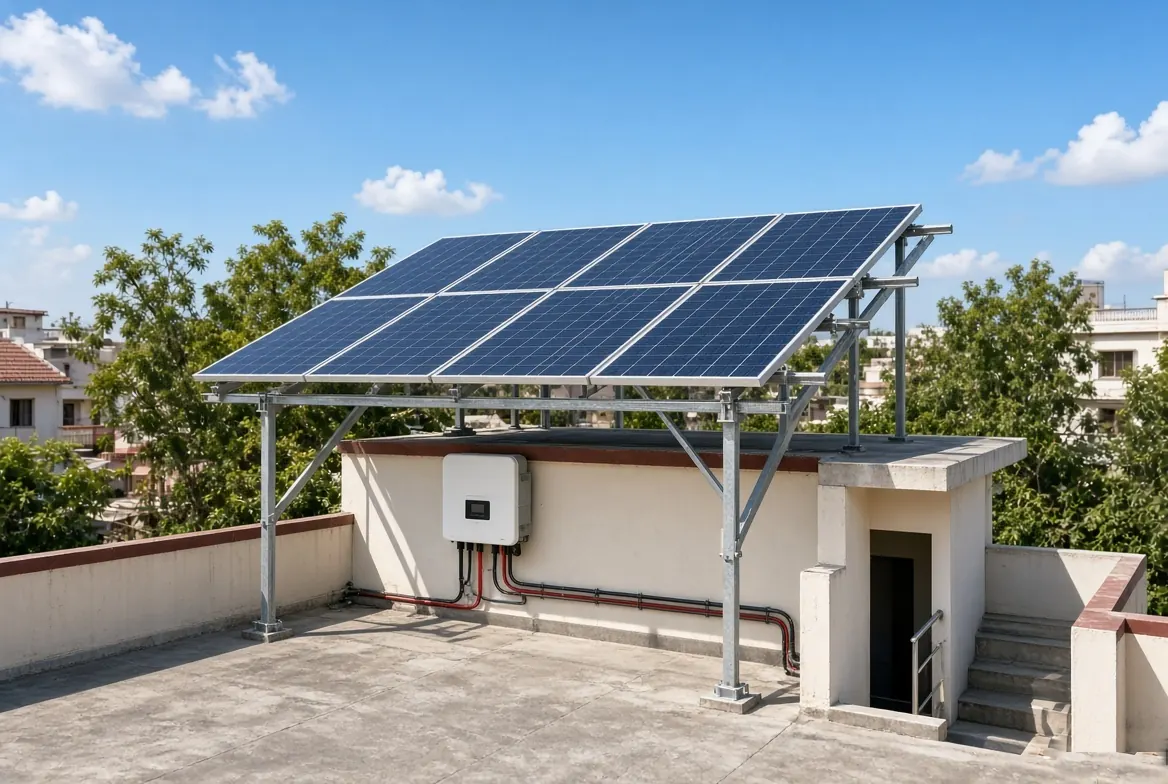
Solar panels are placed on the rails and fixed with mid and end clamps by technicians using safety gear.
Illustration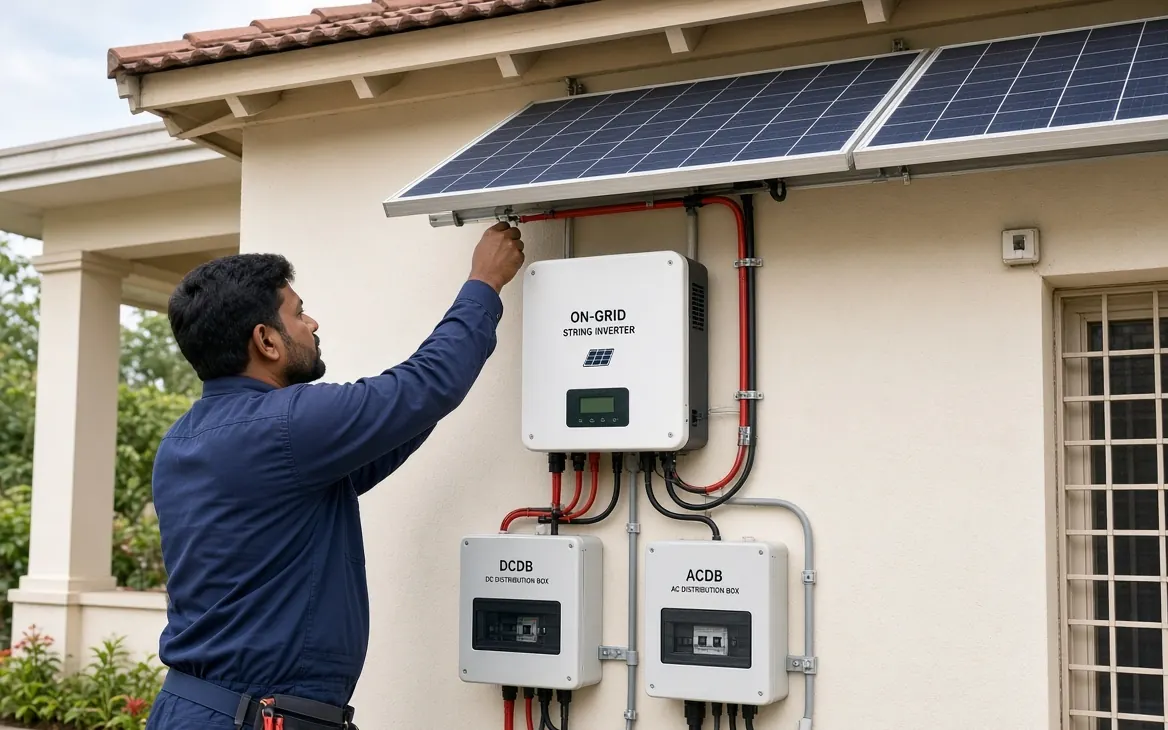
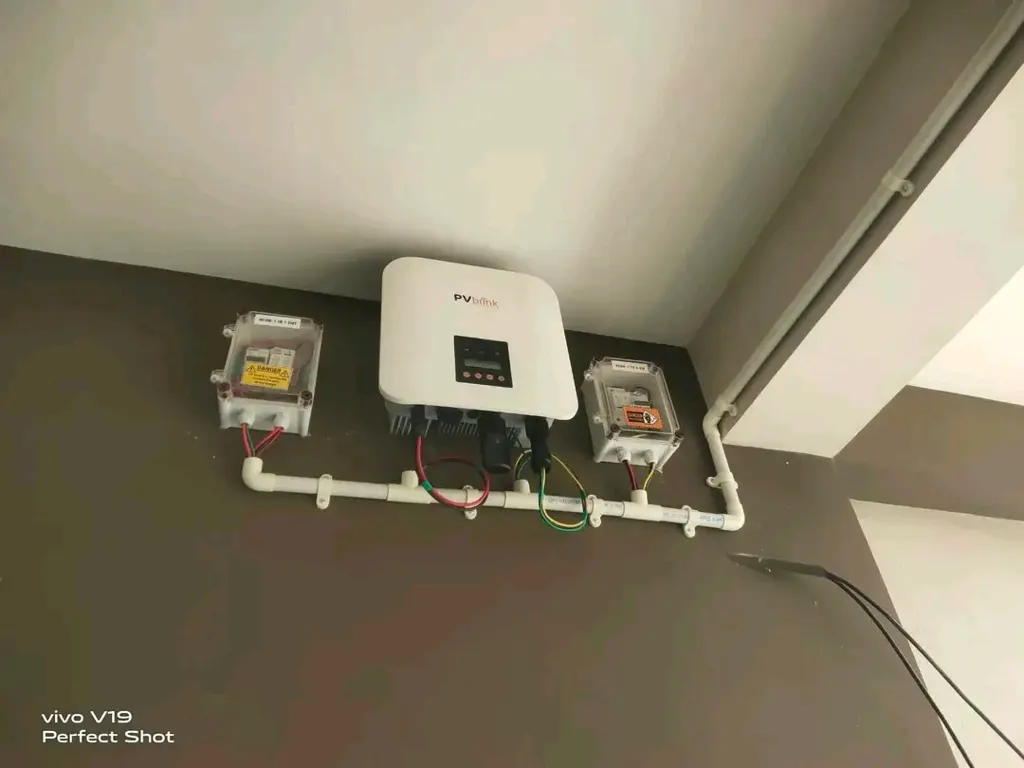
The inverter and DC/AC distribution boxes are wall-mounted close to the array and the main supply point.
Illustration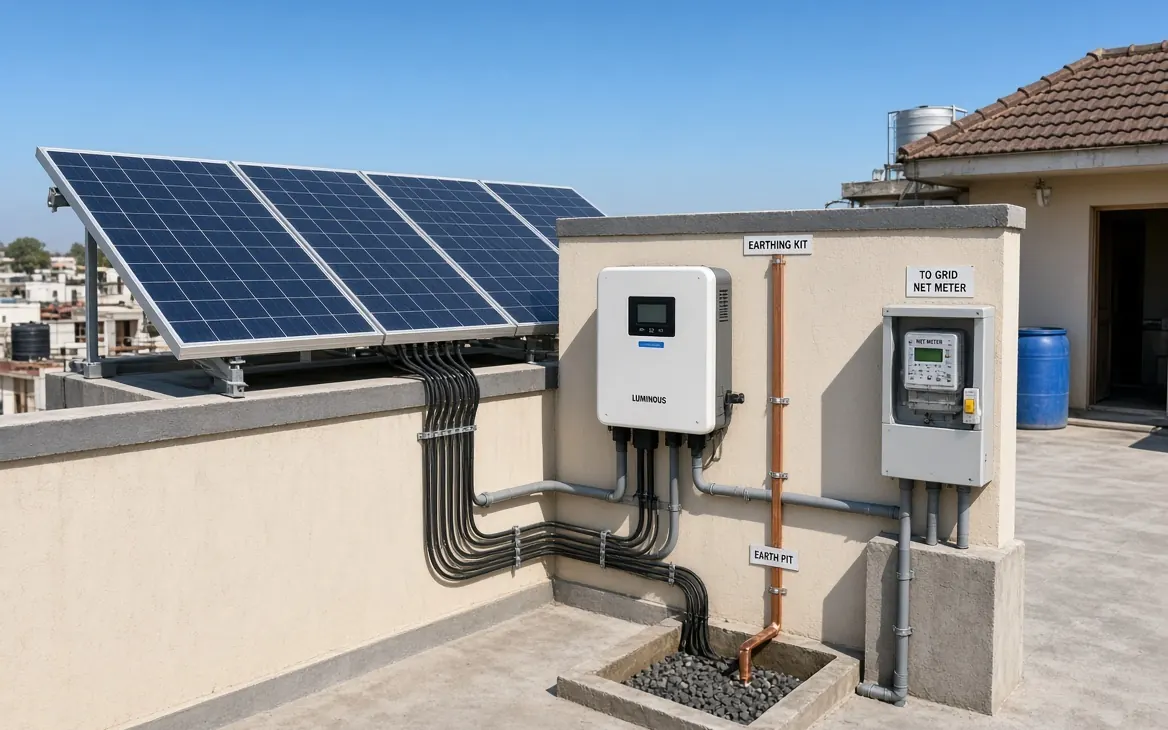
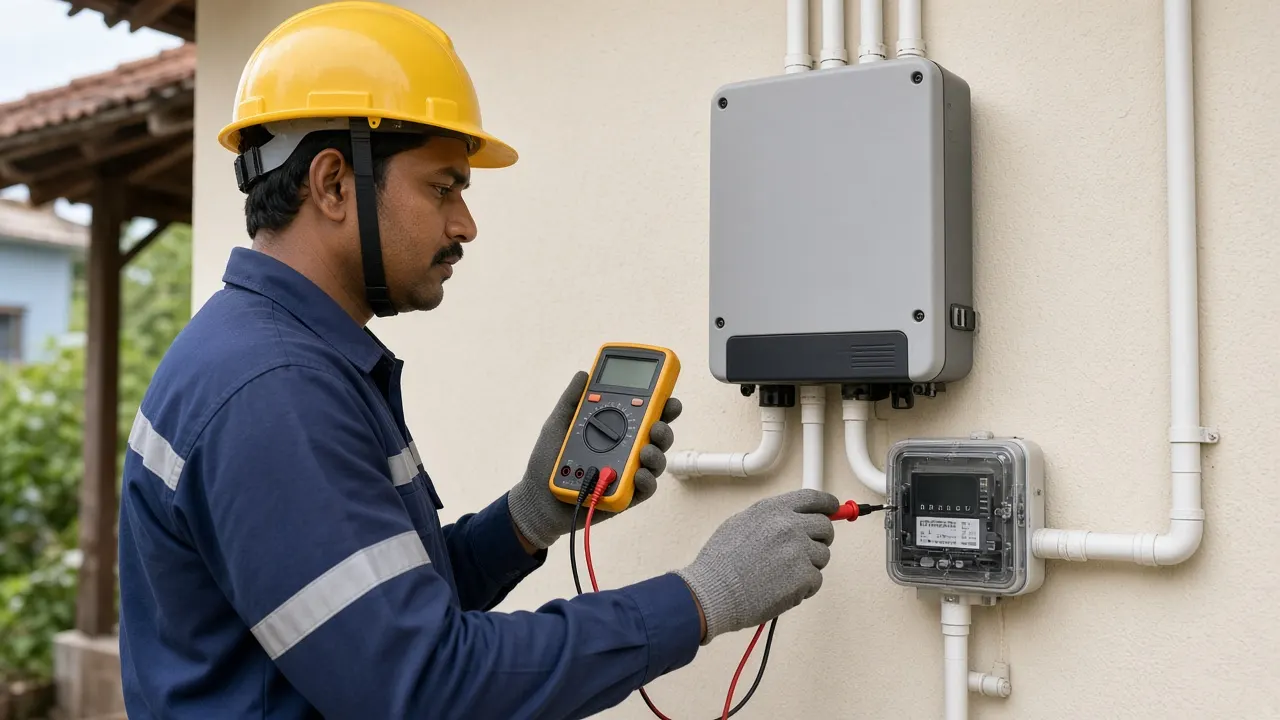
DC and AC wiring, earthing and lightning protection are completed, then the system is connected to the grid via the net meter.
IllustrationGuides
Dealer network
SolarConnect Blog
Practical, up-to-date guides on rooftop solar, PM Surya Ghar subsidy and solar dealership in India.
Complete documents checklist for rooftop solar installation and PM Surya Ghar subsidy in India 2026. Collect Aadhaar, electricity bill, PAN…
Read guide →
Is a 10 kW solar system right for your home, shop, clinic or small factory? We explain the PM Surya Ghar ₹78,000 cap, why commercial connec…
Read guide →
Planning solar on a factory, warehouse or workshop tin shed? We bust 6 common myths about leaks, roof load, heat, subsidy and batteries, an…
Read guide →
Planning to install rooftop solar in India? Find clear answers to common questions about solar panel prices, government subsidies, electric…
Read guide →
This Bijoya Dashami, start a new beginning with rooftop solar. PM Surya Ghar subsidy up to Rs 78,000 for homes, and RESCO/PPA, tax benefits…
Read guide →
Is commercial rooftop solar worth it for your factory or office? We bust 8 common myths on subsidy, upfront cost, RESCO/PPA, tax benefit, r…
Read guide →About us
About SolarConnect India · Contact our team · Become a SolarConnect dealer · Privacy Policy
Information last updated: Oct 2026 · Images in this section are illustrations.
SolarConnect India is a registered solar company based in Serampore, Hooghly, West Bengal, operated by Techsr Enterprise. Our in-house installation team plans and installs rooftop, commercial and agricultural solar systems from our Serampore office.
GSTIN 19CIMPK2964B1Z4 · Udyam UDYAM-WB-07-0035658 (Techsr Enterprise).
14, Ram Sita Lane, Maniktala, Serampore, Hooghly, West Bengal 712201 · Mon–Sat 10:30 AM – 6:30 PM.
Site survey, system design, installation, testing and commissioning by our own team.
Handled with our partner Pro Power Energies, a registered PM Surya Ghar vendor.
SolarConnect explains solar technology for homeowners, students, farmers, businesses and professionals in practical language.
Solar energy comes from sunlight. Photovoltaic modules convert sunlight into electrical energy through the photovoltaic effect.
PV modules generate DC electricity. Inverters and other power electronics convert and manage electricity for compatible loads and grid-connected applications.
Battery storage allows electrical energy to be stored for later use, including selected backup applications when appropriately designed.
Rooftop systems use suitable roof or terrace space to generate electricity close to where it is consumed.
Solar pumping can provide electricity for agricultural, irrigation and water-supply applications when correctly matched to flow and head requirements.
Businesses can evaluate solar using electricity consumption, operating hours, roof or land availability, grid conditions and project economics.
The correct system depends on the electrical requirement, backup expectation, grid availability, energy usage and project design.
Grid-connected PV system generally designed to reduce purchased electricity. Grid outage behaviour depends on the inverter and system architecture.
Solar plus battery storage with optional grid interaction. Backup capability depends on equipment capacity and selected loads.
Independent solar power system for locations without reliable grid supply, normally designed with energy storage or another backup source.
Solar electricity powers a suitable water pump based on required flow, head, pipeline design and available solar resource.
Solar programmes, subsidies, financing arrangements and eligibility can change. Always verify current conditions with the applicable official authority before applying.
A national residential rooftop-solar programme. Current eligibility, subsidy structure, application process and approved requirements should be verified through official government channels.
India's renewable-energy framework includes programmes, policies and implementation mechanisms covering different solar segments and consumer categories.
Banks, NBFCs and other financial institutions may offer solar finance. Interest rate, tenure, eligibility and documentation depend on the lender and product.
Grid-connected rooftop systems may require coordination with the applicable electricity distribution company and metering/interconnection process.
Solar adoption is supported by India's broader renewable energy transition, energy-security goals and decarbonisation objectives.
Do not rely only on advertisements promising guaranteed subsidies, loans or approvals. Confirm eligibility and process through official channels.
Product availability depends on project requirements, location, stock, manufacturer terms and technical compatibility. Always verify current product datasheets.
A properly designed project begins with understanding the customer requirement and site before finalising equipment.
Understand electricity consumption and objective.
Assess roof, land, shading and electrical infrastructure.
Evaluate capacity, modules, inverter, structure and storage.
Review quotation, financing, applicable support and scope.
Installation, testing, commissioning and handover.
This calculator is an educational planning tool, not a final engineering design or quotation.
Solar technology connects science, mathematics, electrical engineering, agriculture, economics and environmental studies.
Learn sunlight, renewable energy, photovoltaic effect, electricity, circuits and basic energy conversion.
Explore PV technologies, batteries, inverters, power electronics, grid integration and renewable-energy economics.
Understand solar pumps, water flow, total dynamic head, irrigation requirements and agricultural energy planning.
Simple explanations for common solar questions.
Tell us whether you need residential rooftop solar, commercial or industrial solar, solar pumping, battery storage, on-grid, off-grid, hybrid or a solar business discussion.
For accurate system planning, site conditions and actual electricity consumption should be assessed before final capacity selection.
Email: info@thetechsr.com