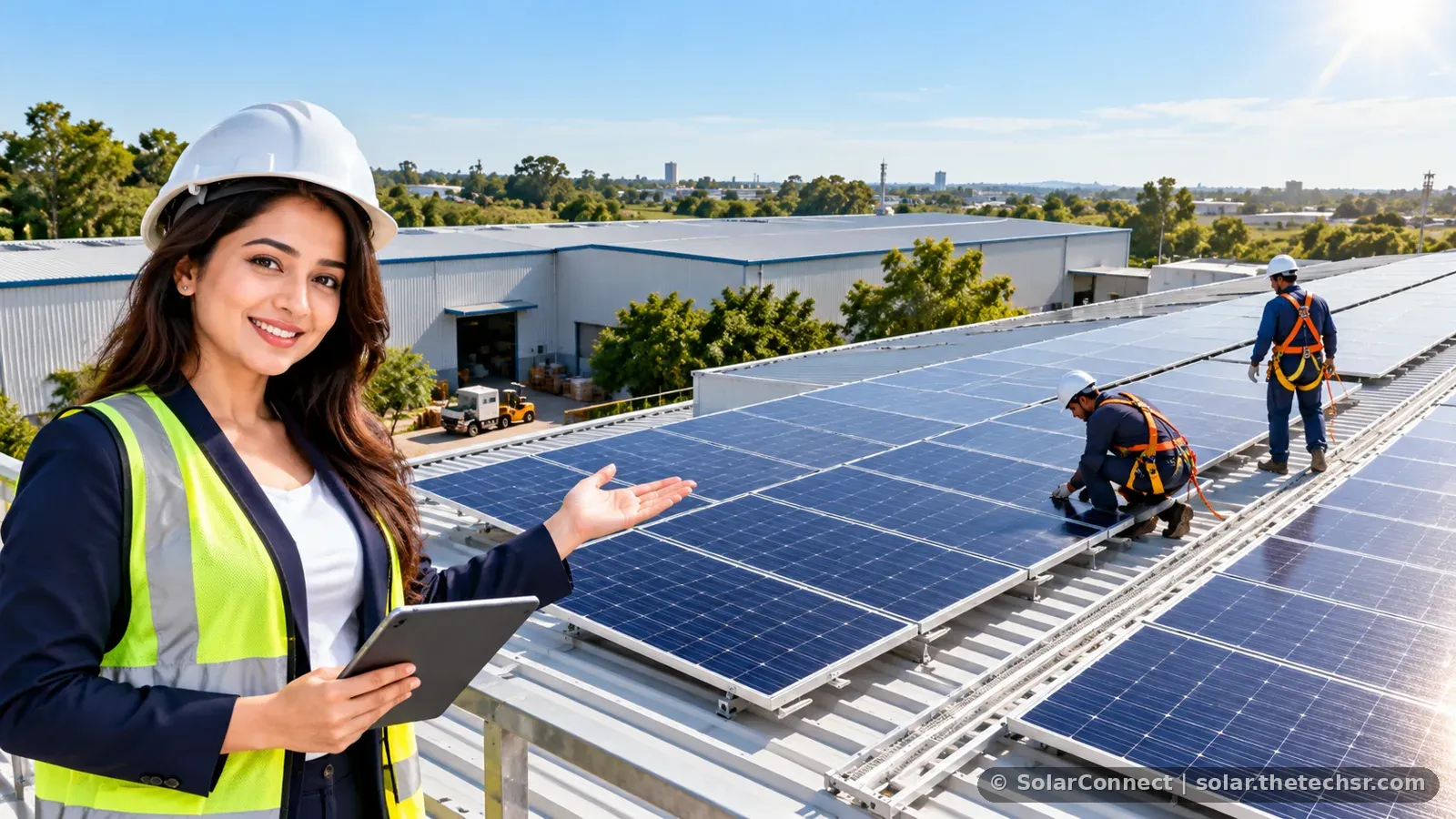
Solar on Tin Shed & Metal Roofs in India 2026: 6 Myths vs Facts for Factories and Businesses
Planning solar on a factory, warehouse or workshop tin shed? We bust 6 common myths about leaks, roof load, heat, subsidy and batteries, and explain mounting options and planning steps for metal-roof solar in India.
Factories, warehouses, cold stores, workshops, schools and petrol pumps across India sit under large metal-sheet (tin shed) roofs. These roofs are often the biggest unused sunny space a business owns, yet many owners hesitate to put solar on them because of what they have heard: "the sheet will leak", "the roof cannot take the weight", "it is only worth it for big industries". This guide separates the myths from the facts so you can plan a metal-roof solar project with confidence.
Quick answer
Metal-sheet roofs are among the most common surfaces for commercial and industrial (C&I) rooftop solar in India. With a structural check of the purlins and sheets, the right mounting method (non-penetrating clamps for standing-seam sheets, or properly sealed fasteners for trapezoidal sheets) and correct sizing to your daytime load, a shed roof can support a safe, leak-free solar plant. Business and industrial connections are not covered by the residential PM Surya Ghar subsidy, so the value comes from lower daytime grid purchase and the tax benefits your CA can advise on. For a site-specific design and price, consult us.
Myth vs fact: solar on tin shed and metal roofs
Myth 1: "Solar panels will make my shed roof leak"
Fact: Leaks come from poor installation, not from solar itself. On standing-seam roofs, clamps grip the seam without drilling. On trapezoidal sheets, rails are fixed on the crest (top) of the profile with EPDM-washer fasteners and sealant, never in the valley where water flows. A good installer also plans walkways so that workers do not dent sheets during maintenance.
Myth 2: "Any shed can carry solar, no check needed"
Fact: Every shed must be checked first. Old or corroded sheets, thin purlins or a roof already near the end of its life should be repaired or replaced before solar goes on, because a solar plant is meant to stay on the roof for decades. A structural review of purlin spacing, sheet condition and wind exposure is part of a professional site survey.
Myth 3: "Metal roofs get too hot, so solar will not work"
Fact: Panels do lose some efficiency as they heat up, but this is true on every roof. Mounting rails leave an air gap under the modules for ventilation, and many owners notice the panels also shade the sheet, which can reduce heat inside the shed. Panel choice matters too; read our guide on bifacial vs TOPCon panels.
Myth 4: "Solar on a shed is only for big factories"
Fact: Small workshops, rice mills, cold rooms, schools, hospitals and godowns can all use shed-roof solar. What matters is whether you use most of your electricity during daytime hours, when the plant generates. If your load is mostly daytime, a right-sized on-grid system gives the best value. See why solar should be designed around your usage habits.
Myth 5: "Businesses get the same PM Surya Ghar subsidy as homes"
Fact: PM Surya Ghar: Muft Bijli Yojana is for residential connections: Rs 30,000 for 1 kW, Rs 60,000 for 2 kW and up to Rs 78,000 for 3 kW and above. Commercial and industrial connections are not eligible. Some states and DISCOMs run separate schemes or net-metering/gross-metering rules for C&I users, so check your state's current rules. Read our state-wise solar subsidy guide.
Myth 6: "You need batteries for a commercial plant"
Fact: Most C&I rooftop plants are on-grid and run without batteries. Batteries make sense only when you face frequent power cuts or need backup for critical loads. Compare options in on-grid vs off-grid vs hybrid and battery sizing for homes and businesses.
Mounting options for metal roofs
| Roof type | Common mounting method | Drilling into sheet? | Key check before install |
|---|---|---|---|
| Standing-seam sheet | Seam clamps with rails | No | Seam profile matches clamp type |
| Trapezoidal / corrugated sheet | Short rails or mini-rails fixed on crests | Yes, on crests with sealed fasteners | Purlin spacing and sheet thickness |
| Old or corroded sheet | Replace or repair sheet first | Depends on new sheet | Remaining life of the roof |
| Shed with skylights or vents | Layout planned around openings | As per sheet type | Shading and access walkways |
How to plan a shed-roof solar project
Step 1: Study your bill and daytime load
Collect 12 months of electricity bills and note your sanctioned load, tariff category and working hours. This decides the system size more than the roof area does.
Step 2: Site survey and structural check
The installer inspects sheets, purlins, roof slope, orientation, shading from nearby buildings or water tanks, and the cable route to your main panel.
Step 3: Choose panels, inverter and metering
SolarConnect India supplies panels from trusted partner brands; we do not manufacture panels. Ask for the panel datasheet, inverter warranty and the metering arrangement your DISCOM allows. Our 12-point quotation checklist helps you compare offers line by line.
Step 4: Approvals, installation and commissioning
Apply for the DISCOM connection and meter, complete installation, then get the plant inspected and commissioned. Learn how net metering works.
Step 5: Maintenance
Industrial dust settles quickly on shed roofs. Plan safe cleaning access and periodic checks of fasteners and sealant. See our cleaning and maintenance guide and warranty guide.
Frequently asked questions
Can rooftop solar be installed on a tin shed roof in India?
Yes. Metal-sheet roofs are widely used for commercial and industrial solar, provided the sheets and purlins pass a structural check and the correct mounting method is used.
Will solar panels cause my metal roof to leak?
Not when installed correctly. Standing-seam roofs use non-drilling clamps, and trapezoidal sheets use crest-mounted fasteners with EPDM washers and sealant.
Should I replace an old shed roof before installing solar?
If the sheets are corroded or near the end of their life, repair or replace them first, because removing and reinstalling a solar plant later adds cost and downtime.
Do factories and shops get the PM Surya Ghar subsidy?
No. PM Surya Ghar is for residential connections only. Businesses should check state-level C&I rules and discuss tax benefits with their CA.
Do I need batteries for a solar plant on my factory shed?
Usually not. Most commercial plants are on-grid. Batteries are useful mainly for frequent power cuts or critical backup loads.
How is the size of a commercial shed-roof solar plant decided?
By your daytime electricity use, sanctioned load, DISCOM metering rules and usable shade-free roof area, based on a site survey.
What does a shed-roof solar plant cost?
Cost depends on size, panel and inverter brands, mounting type and site conditions. For an exact quotation for your site, consult us.
Does SolarConnect India install commercial solar outside West Bengal?
Yes, SolarConnect India works on a pan-India basis with partner-brand panels. Share your location and bill to get started. See our commercial solar projects page.
Plan your shed-roof solar with SolarConnect India
Send us your last electricity bill and a few photos of your shed roof, and our team will guide you on suitability, size and next steps. Call or WhatsApp +91 92823 67700 or call 033 3183 5203. You can also read our commercial rooftop solar myths guide.
Source: SolarConnect India – solar.thetechsr.com
Back to Solar Blog