Solar Electricity System in India: How Solar Connection Works from Solar Panel to Electricity Bill
Learn how a solar electricity system works in India, from using solar panels and converting sunlight into electricity to connecting your home with the grid, net meter and electricity bill. This practical guide explains solar connection, electricity generation, excess power export and the key things to understand before installing rooftop solar.
If you are searching for solar electricity in India, installing solar panels is only one part of the complete system. To understand how rooftop solar actually works, you need to know how solar panels generate electricity, how the inverter converts it, how your home uses that electricity, how a solar connection works with the electricity grid, and how the meter records imported and exported power.
This complete guide explains the solar electricity system in India in simple terms, from sunlight hitting the solar panel to the electricity reaching your home and the remaining power being managed through the grid.
What Is a Solar Electricity System?
A solar electricity system is a combination of solar photovoltaic panels and supporting electrical equipment designed to generate electricity from sunlight. A typical rooftop system can include solar panels, an inverter, mounting structures, cables, protection equipment and a suitable electricity meter.
The basic process is simple:
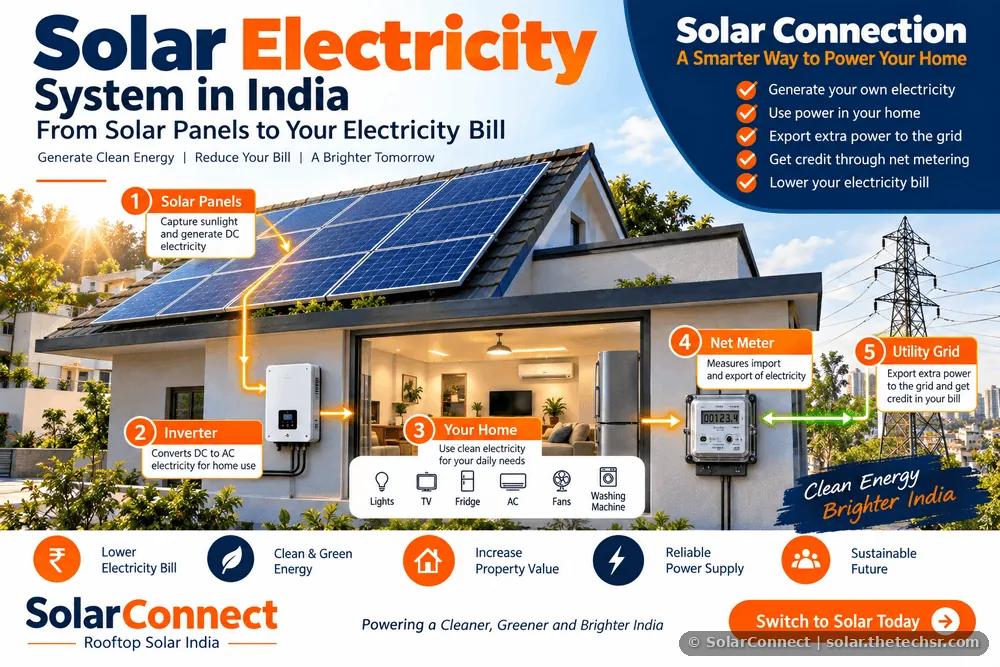
Sunlight → Solar Panels → DC Electricity → Inverter → AC Electricity → Home → Grid
During daylight hours, the solar panels generate electricity. The inverter converts the generated DC electricity into AC electricity that can be used by household appliances. If the system produces more electricity than the home is consuming, the surplus may be exported to the electricity grid under the applicable metering arrangement.
How Does a Solar Panel Generate Electricity?
Solar panels use photovoltaic cells to convert sunlight into electrical energy. When sunlight reaches the photovoltaic cells, they generate DC electricity.
The amount of electricity generated by a solar panel system depends on several factors, including:
- Solar system capacity
- Sunlight availability
- Roof orientation and tilt
- Partial or complete shading
- Temperature and weather conditions
- Panel technology
- Inverter performance
- System design and installation quality
If you want to understand different solar panel technologies before selecting a system, read our guide on Solar Panel Types and Benefits: Complete Guide to Choosing the Right Solar Panel.
What Happens Inside a Solar Electricity System?
A rooftop solar system can be understood through five main stages.
1. Solar Panels Capture Sunlight
The solar panels installed on the rooftop receive sunlight and generate DC electricity.
2. The Inverter Converts DC to AC
The electricity generated by solar panels is DC electricity. The inverter converts it into AC electricity so that it can be used by electrical appliances and integrated with the property's electrical system.
3. Your Home Uses Solar Electricity
The generated electricity can be used by appliances such as lights, fans, televisions, refrigerators, computers, air conditioners and washing machines, depending on the system capacity and the home's electricity demand.
4. The Meter Records Electricity Flow
When the solar system is connected to the electricity grid, the applicable meter can record electricity imported from or exported to the grid according to the approved metering arrangement.
5. Surplus Electricity Can Move to the Grid
When solar generation is higher than the home's immediate electricity requirement, surplus electricity may be exported to the grid where the applicable rules and connection arrangement permit it.
What Is a Solar Connection?
A solar connection is not simply the physical connection of solar panels to a house. It involves integrating the solar generation system with the property's electrical network and, for a grid-connected system, the electricity distribution network.
A simplified grid-connected arrangement looks like this:
Solar Panels → Inverter → Home Load ↔ Electricity Meter ↔ Utility Grid
This means electricity can be consumed directly by the home, while electricity may also be imported from or exported to the grid depending on generation and consumption at a particular time.
What Happens When Solar Generation Is Higher Than Home Consumption?
Imagine that your rooftop solar system is generating 3 kW while your home is currently using only 1 kW. The remaining generation may be available for export to the grid through the applicable metering arrangement.
On the other hand, if your home requires more electricity than the solar system is producing at that moment, additional electricity can be imported from the grid, subject to the applicable electricity connection and regulations.
This is one of the most important concepts to understand before installing rooftop solar because solar generation and household electricity consumption do not always occur at exactly the same time.
Why Your Electricity Usage Pattern Matters
Two homes with exactly the same monthly electricity bill may have very different electricity usage patterns.
For example, one family may use most of its electricity during the afternoon, while another may consume most of its electricity in the evening. Since rooftop solar generally produces electricity during daylight hours, the timing of electricity consumption can affect how much solar generation is directly used by the home.
We have explained this in detail in our article The Solar Timing Problem: Why Your Rooftop Solar System Should Be Designed Around Your Electricity Habits.
Solar Electricity and Net Metering
Net metering is one of the important concepts associated with grid-connected rooftop solar. A suitable bidirectional metering arrangement can record electricity flowing from the grid to the consumer and electricity flowing from the consumer's solar system towards the grid.
The exact rules, approval process, settlement mechanism and eligibility can vary depending on the applicable state regulations and electricity distribution company.
For a detailed explanation, read our guide: Solar Net Metering in India: How Rooftop Solar Net Metering Works.
Can Solar Electricity Completely Replace Grid Electricity?
For a standard grid-connected rooftop solar system, the answer depends on the system design and electricity consumption pattern. Solar panels generate electricity when sufficient sunlight is available, but a home may still need grid electricity when solar generation is insufficient.
At night, conventional solar panels do not generate electricity because there is no sunlight. A grid-connected property can therefore import electricity from the grid when required.
If backup electricity during grid outages is an important requirement, a suitably designed battery or hybrid solar system may be considered. A standard grid-tied system should not be assumed to provide backup power during a grid outage.
On-Grid, Off-Grid and Hybrid Solar Systems
Solar systems can be designed in different configurations depending on the consumer's requirements.
| System Type | Grid Connection | Battery | Main Purpose |
|---|---|---|---|
| On-Grid | Yes | Usually no | Solar generation with grid-connected electricity use |
| Off-Grid | No | Generally required | Independent electricity supply with energy storage |
| Hybrid | Usually yes | Yes | Solar generation, grid integration and backup capability |
For a more detailed comparison, see On-Grid vs Off-Grid vs Hybrid Solar System: Which One Is Right for You?.
How Much Electricity Can a Rooftop Solar System Produce?
Solar generation cannot be determined from system capacity alone. A 1 kW system in one location may produce a different amount of electricity from a 1 kW system in another location because sunlight, weather, shading, orientation and system conditions vary.
Therefore, consumers should use their actual electricity consumption and site conditions when deciding on solar system capacity instead of selecting a system only by its nominal kW rating.
What Should You Check Before Installing Rooftop Solar?
Before installing a rooftop solar electricity system, check the following:
- Your recent electricity consumption.
- Your monthly and seasonal electricity usage pattern.
- Available shadow-free rooftop area.
- Roof structure and installation conditions.
- Solar panel technology and specifications.
- Inverter capacity and compatibility.
- Applicable DISCOM requirements.
- Applicable metering arrangement.
- Installation and commissioning requirements.
- Available government subsidy or financial assistance, if eligible.
Our detailed checklist, Before You Install Rooftop Solar in India: Check These 7 Things First, covers several practical points that consumers should consider before installation.
Solar Full Kit: What Components Are Required?
A complete rooftop solar installation involves more than solar panels. Depending on the system type and project requirements, a solar kit can include panels, inverter, mounting structure, cables, connectors, protection devices, earthing and metering-related components.
Read our detailed guide: Solar Full Kit Information: On-Grid, Off-Grid and Hybrid Solar Systems Explained.
Solar Electricity and PM Surya Ghar
Residential rooftop solar consumers in India may also be interested in the PM Surya Ghar: Muft Bijli Yojana and the applicable Central Financial Assistance structure.
However, subsidy eligibility, application requirements, installation verification and the applicable process should always be checked against the current official scheme and the relevant electricity distribution authority.
For a detailed SolarConnect guide, visit Solar Subsidy in India 2026: PM Surya Ghar Rooftop Solar 1 kW to 3 kW Guide.
Solar Electricity Can Reduce Grid Dependence
One of the main reasons consumers consider rooftop solar is to reduce the amount of electricity they need to purchase from the grid.
When solar generation is available, the home can use that electricity for its normal loads. Depending on the system and applicable metering arrangement, surplus generation may also be exported to the grid.
The actual financial benefit depends on system generation, electricity consumption, tariff structure, system cost, applicable incentives and the relevant metering and settlement rules.
Frequently Asked Questions About Solar Electricity
What is solar electricity?
Solar electricity is electrical energy generated from sunlight using photovoltaic solar panels.
What is a solar electricity system?
A solar electricity system is a complete setup containing solar generation equipment and the electrical components required to use, convert, protect and manage the generated electricity.
What does solar connection mean?
Solar connection refers to the integration of the solar generation system with the property's electrical system and, where applicable, the utility electricity grid.
Can I use solar electricity directly in my home?
Yes. In a properly designed system, the inverter converts solar-generated DC electricity into AC electricity that can be used by household electrical loads.
What happens to unused solar electricity?
Depending on the system configuration and applicable regulations, surplus electricity may be exported to the grid through an approved metering arrangement or managed through other system components such as batteries.
Does a normal grid-connected solar system work during a power cut?
A standard grid-tied system generally shuts down during a grid outage for safety reasons. Backup operation requires an appropriately designed hybrid or battery-based system.
Should solar system capacity be selected only from the electricity bill?
No. Electricity consumption is important, but roof area, shading, usage timing, system design, local solar conditions and applicable connection requirements should also be considered.
Related SolarConnect Guides
- Solar Net Metering in India
- Solar Full Kit Information
- Solar Panel Types and Benefits
- Before You Install Rooftop Solar in India
- Solar System and Electricity Usage Timing
- Rooftop Solar in India 2026
- PM Surya Ghar Solar Subsidy Guide
Explore SolarConnect Tools
To explore your rooftop solar requirements, visit the Solar Calculator, Solar Estimate and Solar QOT.
You can also explore more educational articles through the SolarConnect Solar Blog.
Conclusion
A solar electricity system in India is a complete energy setup, not simply a collection of solar panels. Solar panels generate electricity from sunlight, the inverter converts it into usable AC electricity, your home consumes the available power, and the applicable meter and grid connection manage electricity flow when required.
Understanding the complete process helps consumers make better decisions about system capacity, panel technology, inverter selection, electricity usage patterns, net metering and rooftop solar installation.
If you are planning a rooftop solar system, start by understanding your electricity consumption, available roof space and applicable connection requirements. Then compare the system configuration and installation options that suit your actual needs.
SolarConnect | Rooftop Solar India
Source: SolarConnect India – solar.thetechsr.com
Back to Solar Blog