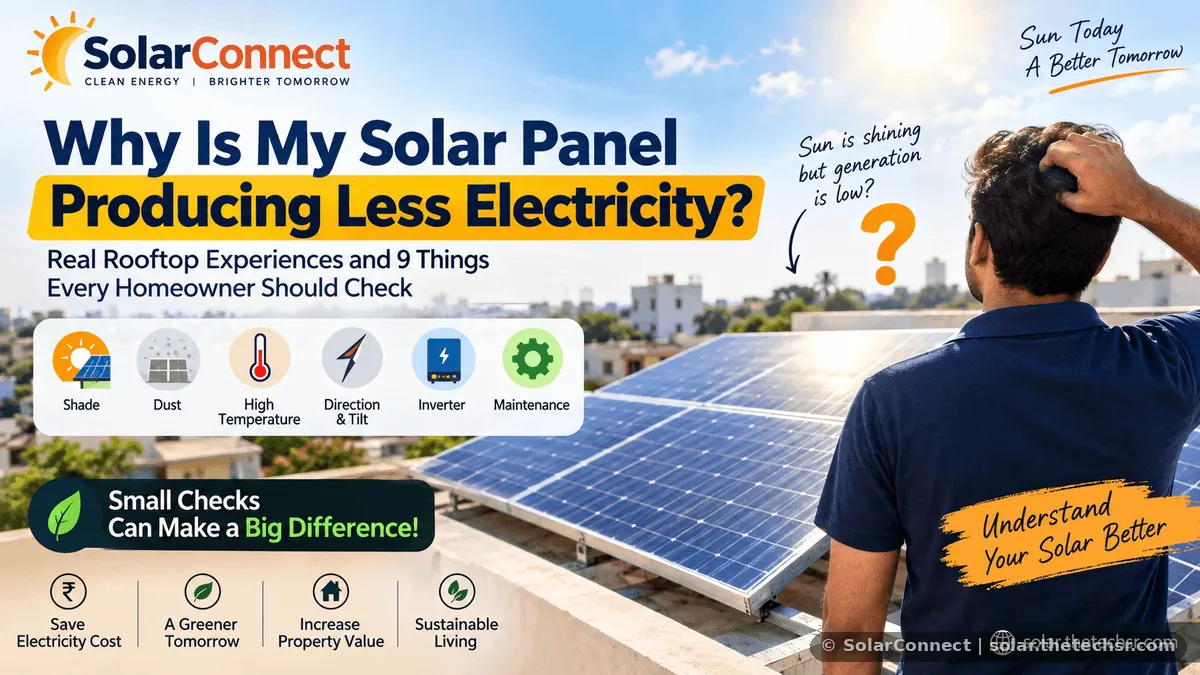
Why Is My Solar Panel Producing Less Electricity? Real Rooftop Experiences and 9 Things Every Homeowner Should Check
A solar system can be installed perfectly and still produce less electricity than expected. From rooftop shade and dust to inverter performance and high temperatures, several small factors can affect solar generation. Learn from common rooftop experiences and discover nine practical ways to improve your solar system’s performance.
“The panels are installed, the sun is shining, but my electricity generation is still lower than I expected.”
This is one of the most common questions homeowners ask after installing a rooftop solar system.
In many cases, there is no major fault with the solar panels. Small factors such as partial shade, accumulated dust, high rooftop temperature, inverter performance, installation direction and even cable losses can affect daily generation.
Here is what one typical homeowner experience tells us:
“I thought my solar system was not working properly because the generation was lower on some days. After checking the rooftop, we found that morning shade and dust were affecting the panels. After cleaning and improving the system setup, the generation became more consistent.”
This is why understanding your solar system is just as important as choosing good-quality equipment.
9 Reasons Your Solar System May Produce Less Electricity
1. Partial Shade on the Rooftop
Even a small amount of shade from a water tank, tree, nearby building, chimney or another rooftop structure can affect solar generation.
Before installation, the rooftop should ideally be checked at different times of the day to understand how sunlight moves across the available space.
2. Dust and Dirt on Solar Panels
Solar panels remain outdoors throughout the year, so dust, pollution, bird droppings and other particles can accumulate on their surface.
When sunlight is blocked by dirt, the panels may not operate at their full potential.
Simple maintenance can make a meaningful difference.
3. High Rooftop Temperature
Solar panels need sunlight to generate electricity, but excessive heat can reduce the electrical efficiency of photovoltaic cells.
This means a very hot summer afternoon does not always produce more electricity simply because the sun is stronger.
4. Incorrect Panel Orientation or Tilt
The direction and angle of solar panels influence how much sunlight they receive during the day.
A professionally designed rooftop system should consider the location, roof structure, available space and expected sunlight exposure before finalizing panel placement.
5. Inverter Performance
The inverter is one of the most important components of a solar power system because it converts the electricity generated by the panels into usable electrical power.
If the inverter is experiencing faults, overheating or performance issues, the overall system output can be affected.
6. Wiring and Connection Losses
Solar generation is not determined only by the panels and inverter. Cable quality, cable length, connectors and electrical connections also matter.
Poor connections or unsuitable wiring can result in energy losses and may create unnecessary system problems.
7. Weather Conditions
Cloudy weather, rain, fog and atmospheric conditions can naturally reduce solar generation.
Therefore, comparing one cloudy day with one clear sunny day does not provide an accurate picture of overall system performance.
A better approach is to monitor generation over a longer period.
8. System Design Does Matter
Two solar systems with the same panel capacity may not produce exactly the same amount of electricity.
Panel technology, inverter selection, rooftop design, shading, installation quality and local weather conditions can all influence actual generation.
This is why a solar system should be designed according to the customer's electricity requirement and rooftop conditions rather than simply selecting a particular capacity.
9. Lack of Regular Monitoring
Many homeowners install solar and then forget to check the system.
Regular monitoring can help identify unusual drops in generation before they become bigger problems.
If your system normally produces a certain level of electricity and suddenly starts producing significantly less under similar weather conditions, it is worth checking the system.
What Should a Homeowner Check First?
- Check whether the panels are clean.
- Look for new sources of rooftop shade.
- Check the inverter display or monitoring system.
- Compare generation across several days rather than one day.
- Check whether the system has reported any error.
- Inspect visible cables and connections for obvious damage.
- Contact a qualified solar professional if generation remains unusually low.
Solar Is an Investment, Not Just an Installation
A rooftop solar system is designed to provide value over many years. The installation is only the beginning.
Good system design, quality components, professional installation, regular monitoring and basic maintenance all contribute to long-term performance.
Instead of asking only “How many panels should I install?”, homeowners should also ask:
- How much electricity does my home actually consume?
- How much usable rooftop space do I have?
- Does my roof receive sufficient sunlight?
- Which system configuration is suitable for my requirement?
- How will I monitor the system after installation?
- What maintenance will be required?
Make Your Solar Decision With Better Information
Every rooftop is different. A solar solution that works well for one home may not be the ideal configuration for another.
That is why understanding your electricity requirement, rooftop condition and expected solar generation should come before making an installation decision.
SolarConnect is built to make solar information easier to understand, compare and use. From solar education to useful solar tools and business solutions, our goal is to help homeowners, dealers and solar professionals make more informed decisions.
Explore SolarConnect's solar tools, guides and latest solar information before planning your next rooftop solar project.
Final Thought
When solar generation is lower than expected, the answer is not always “the solar panel is bad.” Sometimes the reason is much simpler: shade, dust, heat, weather, installation or system design.
The best approach is to understand the complete system, monitor its performance and investigate unusual changes rather than judging the system from a single day's generation.
Smart solar starts with the right information.
SolarConnect — Helping You Understand Solar Better.
https://solar.thetechsr.com/ta/solar-blog.php?post=rooftop-solar-growth-pm-surya-ghar-new-industry-updatesSource: SolarConnect India – solar.thetechsr.com
Back to Solar Blog