Solar Inverter in India: 6 Myths vs Facts
Solar inverter myths vs facts for Indian homes and businesses: power cuts, sizing, lifespan, home UPS vs solar inverter, placement and monitoring.
Solar Inverter in India: Myths vs Facts
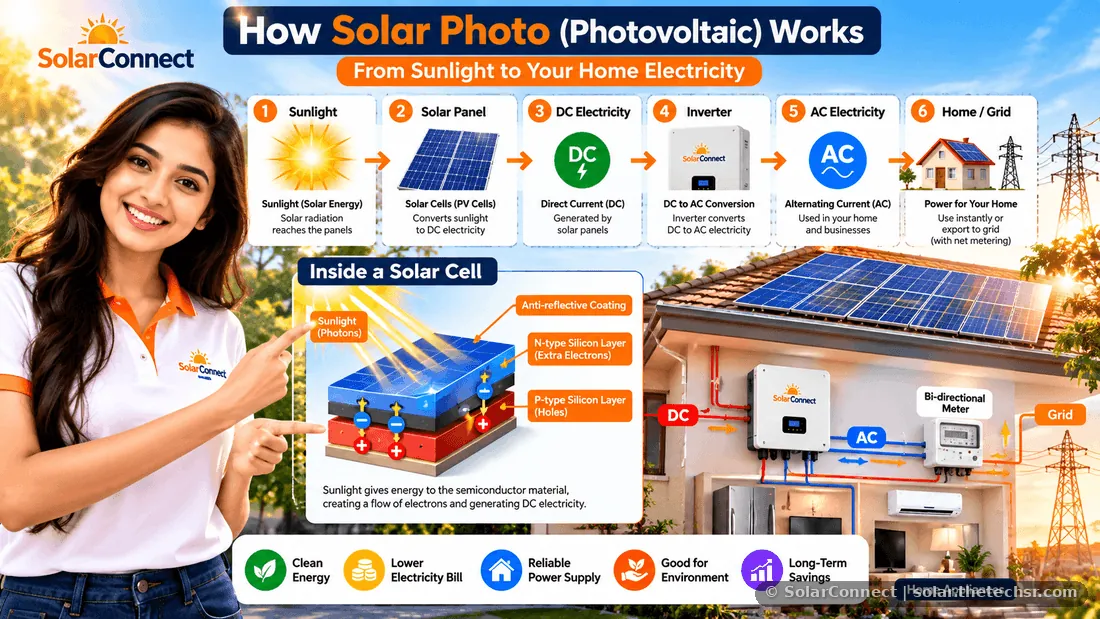
Quick answer: The solar inverter turns the panels' DC power into AC power your home or business can use. An on-grid inverter does not give backup during a power cut, a normal home UPS cannot replace it, and it usually needs replacing once during the panels' life, so choose, size and place it carefully.
Most rooftop solar questions are about panels, but the inverter is the part that decides whether the power reaches your loads and the grid. Here are the common inverter myths with the facts. For more popular myths, see our Solar Myths vs Facts page.
Myth 1: A solar inverter keeps the lights on in a power cut
Fact: An on-grid (grid-tied) inverter shuts down automatically when grid power fails. This anti-islanding safety feature protects line workers repairing the grid. Backup needs a hybrid inverter with a battery. Read does rooftop solar work during a power cut?
Myth 2: My home UPS inverter can run rooftop solar
Fact: A normal home UPS inverter charges a battery from the grid and runs a few loads during cuts. Grid-connected rooftop solar needs a solar on-grid or hybrid inverter that can sync with the grid and export through the net meter. That is also why PM Surya Ghar supports on-grid and hybrid systems: see why on-grid and hybrid solar get the subsidy but off-grid does not.
Myth 3: Inverter kW must exactly equal panel kW
Fact: Panels rarely produce their full rated power in real Indian heat and dust, so designers often keep the panel capacity slightly above the inverter rating. The right ratio depends on your roof, location and DISCOM rules, and should come from the installer's design.
Myth 4: The inverter lasts as long as the panels
Fact: Panels come with long performance warranties, while inverters usually carry shorter product warranties and may need replacement once during the system's life. Check both warranties separately in our solar panel and inverter warranty guide.
Myth 5: The inverter can go anywhere
Fact: Heat shortens inverter life and can reduce output. Install it in a shaded, ventilated, dry place, away from direct afternoon sun and rain, and keep cable runs reasonably short.
Myth 6: Once installed, there is nothing to check
Fact: Most modern inverters show daily generation and error codes on a display or app. A sudden drop or a repeated error is the first sign of a problem. If output looks low, go through why is my solar panel producing less electricity?
Quick Inverter Checklist
| Check | Why it matters |
|---|---|
| On-grid or hybrid type | Decides backup and subsidy eligibility |
| Sizing from a proper design | Matches panels, roof and DISCOM rules |
| Separate inverter warranty | Inverter and panel cover differ |
| Shaded, ventilated location | Longer life and steady output |
| Monitoring app or display | Spots faults early |
For Dealers: Explain the Inverter Early
Many complaints after installation come from customers who expected backup from an on-grid system. Explaining the inverter type clearly at the first visit saves service calls and builds trust. SolarConnect India supplies partner-brand solar panels and supports dealers through its pan-India EPC and distribution network. See how pan-India solar dealership with SolarConnect works.
FAQ
Does an on-grid solar inverter work during a power cut?
No. An on-grid inverter switches off when grid power fails, for the safety of line workers. For backup you need a hybrid inverter with a battery.
Can I use my home UPS inverter for rooftop solar?
Not for a grid-connected system. A normal home UPS inverter only charges and runs a battery; grid-connected rooftop solar needs a solar on-grid or hybrid inverter.
Does a solar inverter last as long as the panels?
Usually not. Panels carry long performance warranties, while inverters normally have shorter warranties and may need replacement once during the panels' life.
Should the inverter size exactly match the panel capacity?
Not always. Designers often keep the panel capacity a little above the inverter rating; the final sizing follows the system design and DISCOM rules.
Where should a solar inverter be installed?
In a shaded, well-ventilated, dry place close to the panels and the meter, because heat and long cable runs reduce output and life.
Talk to the SolarConnect India Team
The SolarConnect India team helps homes, businesses and dealers across India choose the right on-grid or hybrid setup.
📱 WhatsApp / Team: +91 92823 67700 | ☎️ Office: 033 3183 5203
Source: SolarConnect India – solar.thetechsr.com
Back to Solar Blog