Solar Photovoltaic Explained
Learn how solar photovoltaic technology works, from sunlight and solar cells to DC electricity, inverter conversion and usable AC power. Understand solar panels, PV cells, modules, efficiency, shading, installation and the complete solar electricity generation process.
Solar Photovoltaic Explained: How Solar Cells Convert Sunlight into Electricity
When people see a solar panel on a rooftop, the first question is often simple: How does sunlight actually become electricity?
The answer starts with a small component called a photovoltaic cell, commonly known as a solar cell. Multiple solar cells are connected to create a solar module or solar panel, and multiple modules can be combined to build a complete solar PV system.
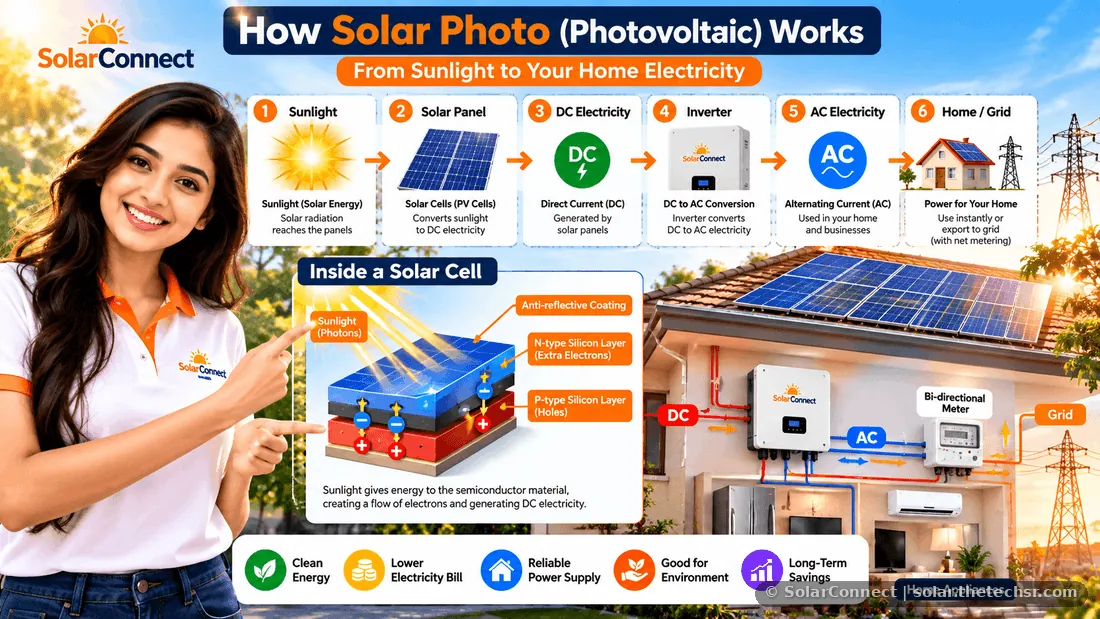
Sunlight → Solar Cell → DC Electricity → Inverter → AC Electricity → Home / Business / Grid
This is the basic journey of solar energy from sunlight to usable electrical power.
What Is Solar Photovoltaic Technology?
Solar photovoltaic technology, commonly called solar PV, converts sunlight directly into electrical energy using photovoltaic cells.
A photovoltaic cell contains semiconductor material. When sunlight reaches the cell, the energy from the light interacts with the semiconductor and causes electrical charges to move. The resulting electrical current can be collected through electrical contacts on the cell.
Silicon is one of the most widely used semiconductor materials in photovoltaic solar cells.
How Does a Solar Cell Work?
A solar cell is the basic building block of a photovoltaic solar panel. Although a single cell is relatively small, many cells can be connected together to produce useful electrical power.
Sunlight reaches the photovoltaic cell
Sunlight provides energy to the semiconductor material.
Electron → Electron → Electron →The movement of electrical charges produces current.
DC Electricity
Solar Cell Working Principle: Step by Step
1. Sunlight
Solar radiation reaches the surface of the solar module. The amount of available sunlight changes with location, time, weather, orientation and other environmental conditions.
2. Photovoltaic Cell
The photovoltaic cell absorbs part of the incoming light energy. The semiconductor material enables electrical charge movement.
3. Electrical Current
The movement of electrical charges produces DC electrical current. Metal contacts on the cell collect the current.
4. Solar Module
Individual solar cells are connected together to create a larger unit called a solar module or solar panel.
5. Inverter
The inverter converts the DC electricity generated by the solar modules into AC electricity suitable for normal electrical loads.
6. Usable Electricity
The converted electricity can be used by suitable appliances, equipment and electrical systems depending on the solar system design.
The Complete Solar Electricity Flow
Solar Cell vs Solar Panel vs Solar System
These three terms are often used interchangeably, but they describe different levels of a photovoltaic system.
Solar Cell
The individual photovoltaic device that converts sunlight into electrical energy.
Solar Panel / Module
A collection of interconnected solar cells assembled into a protected module for practical electricity generation.
Solar PV System
A complete installation that may include solar modules, inverter, mounting structure, cables, protection equipment, monitoring systems and other components.
What Happens After Solar Panels Generate DC Electricity?
Solar photovoltaic modules normally produce direct-current electricity. Most household electrical appliances use alternating-current electricity, so an inverter is an important part of a typical grid-connected rooftop solar installation.
The inverter performs the DC-to-AC conversion and also manages important electrical functions according to the system design.
What Can Affect Solar Panel Electricity Generation?
- Sunlight intensity: Available solar radiation influences the energy available to the photovoltaic cells.
- Temperature: Solar module electrical performance changes with operating temperature.
- Shading: Shadows from trees, buildings or other objects can reduce generation.
- Orientation: The direction and positioning of the modules affect how much sunlight reaches the panel.
- Tilt: The installation angle should be considered during system design.
- Dust and soiling: Dirt on the module surface can reduce the sunlight reaching the cells.
- Module technology: Different cell and module technologies have different electrical characteristics.
- System design: Inverter selection, electrical configuration and installation quality also matter.
Solar panel efficiency does not mean that all sunlight falling on a panel becomes electricity. Photovoltaic conversion has physical and engineering limits, and actual system output depends on the complete installation and operating conditions.
Different Solar Panel Technologies
Modern solar panels can use different photovoltaic cell technologies. Technology selection should be based on the application, available roof area, system requirements, product specifications and project conditions.
SolarConnect also has a detailed guide covering modern solar panel technologies and their practical differences.
Read: How Solar Panels Perform in Sunlight: Bifacial vs TOPCon Solar Panels Explained
Solar Panel Types and Benefits
Understanding the difference between solar panel types is important before selecting a system. Panel construction, cell technology, power rating, efficiency, warranty and application should all be considered.
Read: Solar Panel Types and Benefits: Complete Guide to Choosing the Right Solar Panel
Solar Photovoltaic Technology and Rooftop Solar
Solar PV can be used for residential rooftops, commercial buildings, industrial facilities, institutions and other applications.
For a rooftop installation, the solar modules are only one part of the complete system. Roof space, electricity consumption, shading, electrical requirements, inverter selection, mounting structure, protection equipment and applicable grid requirements should also be considered.
India has substantial solar energy potential, and MNRE describes photovoltaic solar power as a scalable way to harness solar energy across the country.
On-Grid, Off-Grid and Hybrid Solar Systems
The photovoltaic generation principle begins with solar cells in all three system categories, but the overall system architecture can be different.
- On-grid solar: Designed to operate in connection with the electricity grid.
- Off-grid solar: Designed for applications where energy storage and independent operation are important.
- Hybrid solar: Combines grid-connected operation with battery storage and additional energy-management capabilities depending on the system design.
Read: On-Grid vs Off-Grid vs Hybrid Solar System: Which One Is Right for You?
How to Choose the Right Solar System
There is no single solar system design that fits every property. Electricity consumption, roof area, sunlight, budget, backup requirements and grid conditions should be evaluated before selecting a system.
Read: How to Choose the Right Solar System for Your Home
Solar Full Kit: More Than Just Solar Panels
A complete solar installation may include solar panels, inverter, mounting structure, cables, electrical protection equipment and other components. The exact configuration depends on the system type and project requirements.
Read: Solar Full Kit Information: On-Grid, Off-Grid and Hybrid Solar Systems Explained
Solar Installation: Why System Design Matters
Correct installation is important because the performance of a solar PV system depends on more than the rated capacity of the modules.
Before installation, users should consider roof condition, available space, shading, orientation, electrical configuration, inverter location, mounting structure and applicable technical requirements.
Calculate Your Solar Requirement
Before choosing a solar system, it is useful to estimate the required system capacity based on electricity consumption and project conditions.
Use SolarConnect Solar Calculator
You can also prepare a project estimate:
For quotation preparation:
Solar Subsidy and Finance
Government schemes and financing can be important considerations for eligible rooftop solar customers. Eligibility, documentation, subsidy conditions and applicable rules should always be checked against the latest official information before making a purchase or application.
Solar Subsidy and Loan Process in India: Complete PM Surya Ghar Application Guide
Solar Finance in India: Government Subsidy, Rooftop Solar Loans and EMI Options
Solar Business and Dealership
Solar photovoltaic technology also creates opportunities for dealers, distributors, EPC companies, installers and other solar businesses. Understanding the product, system design and customer requirement is important when building a solar business.
- Start Your Solar Business with SolarConnect
- Solar Trading Business in India
- Partner with SolarConnect
More SolarConnect Resources
Related SolarConnect Guides
- Learn the Basics of Solar Energy with SolarConnect
- Solar Energy in India
- How SolarConnect Is Making Solar Energy More Accessible
- Solar Panel Types and Benefits
- Bifacial vs TOPCon Solar Panels
- Why Solar Panel Prices Go Up and Down
- Solar Finance in India
- Solar Subsidy and Loan Process
- Solar Full Kit Information
- On-Grid vs Off-Grid vs Hybrid Solar
- How to Choose the Right Solar System
- SolarConnect CRM User Manual
- Protecting Dealer Margins
- Adani and Tata Solar Panels for B2B
- Solar Business Operations and CRM Tools
- Solar Installation Business Workflow
- Solar Sales Conversation Tips
- How to Find High-Quality B2C Solar Leads
- How to Find Free B2C Solar Leads
- How to Grow a Startup Business in India
- Transforming India Through Solar Energy
Final Takeaway
Solar photovoltaic technology may look complicated when you first see a solar panel, but the basic process is straightforward:
☀️ Sunlight
↓
🔲 Photovoltaic Solar Cell
↓
⚡ DC Electricity
↓
🔄 Inverter
↓
🏠 AC Electricity
↓
🔌 Home, Business or Grid
Understanding this basic flow makes it easier to understand solar panels, solar modules, inverters, rooftop solar systems, solar installation, battery storage and different solar technologies.
Before selecting a solar system, compare the complete system rather than looking only at the panel. Consider your electricity consumption, roof conditions, system type, equipment specifications, installation requirements, warranty and applicable rules.
Start Exploring Solar with SolarConnect
Learn about solar technology, calculate your requirement, prepare an estimate and explore practical solar guides.
Solar Calculator Solar Estimate Solar QOT Explore Solar BlogsDisclaimer: This article is for general educational purposes. Solar generation, system performance, installation requirements, costs, subsidy eligibility, grid connection and applicable regulations can vary by location, project design and current government or DISCOM rules. Verify current requirements with the relevant authority and qualified solar professional before making a purchase or installation decision.
Source: SolarConnect India – solar.thetechsr.com
Back to Solar Blog